If you've been sending HARO pitches recently, you've probably noticed that more people are using AI to help write them. And honestly, there's nothing wrong with that. AI can save time, help you organize your thoughts, and make the writing process easier.
The problem starts when people let AI do all the thinking.
Journalists read dozens, sometimes hundreds, of responses for a single query. After a while, it's easy to spot answers that sound generic, repeat common advice, or feel like they were written by someone with no real experience.
The truth is that AI works best when it helps you communicate your expertise, not replace it. The strongest HARO pitches still come from real experience, real observations, and real examples. AI simply helps package those ideas in a clearer way.
In this blog, you'll learn how to use AI as a helpful assistant while keeping your pitches useful, believable, and worth quoting.
#1. Use AI for Research
One of the best ways to use AI for HARO is during the research stage. And you’re not the only one doing it. A report says people aged 25 to 34 account for over 60% of all ChatGPT users worldwide.
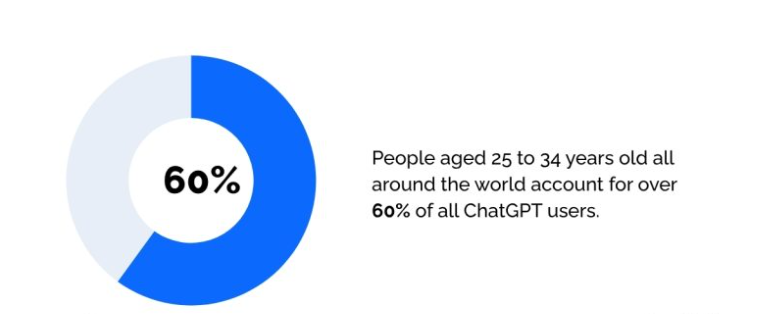
That means many professionals, marketers, founders, and agency people are already using AI in their daily work.
So if you copy whatever AI gives you and send it as your HARO pitch, your answer can easily sound like everyone else’s.
Use AI to organize ideas, explore angles, or break down a broad journalist query. Then choose the points you’ve actually seen in your own work. Your real experience is the part AI cannot fake, and that’s what makes your pitch worth quoting.
#2. Feed AI Your Real Expertise First
Most people open ChatGPT, paste a HARO query, and ask for an answer. That sounds efficient, but it often produces weak responses because the AI knows nothing about your background, experience, or results.
A better approach is to start with your own thoughts. Write down a few points based on what you've actually seen. Share lessons from client work, mistakes you've made, successful campaigns, or patterns you've noticed over time.
Once you have those ideas, give them to AI and ask it to improve the flow, shorten the wording, or make the response easier to read.
#3. Make AI Help You Answer the Exact Question
A surprising number of HARO pitches fail because they do not answer the question being asked. The response may contain useful information, but if it misses the main point of the query, the journalist has little reason to use it.
So before writing your response, paste the query into AI and ask a simple question: "What is the journalist specifically looking for here?" Sometimes you'll discover that the question is much narrower than it first appears.
For example, a journalist may ask about link-building strategies, but what they really want is one practical tactic that has worked in real situations. Understanding that difference can help you write a much stronger response.
When you know exactly what the journalist needs, you can stay focused and avoid adding extra information that doesn't help answer the question. Clear, direct answers are usually easier for journalists to quote and include in their articles.
#4. Use AI to Improve Clarity
One mistake I see often is people using AI to make their HARO responses sound more “professional.” The result is usually a pitch filled with complicated wording, long sentences, and phrases that nobody actually says in a normal conversation.
The problem is that journalists are not looking for fancy writing. They are looking for useful insights that readers can understand quickly.
After writing your response, try using AI for a simple task: make it clearer. Ask it to shorten long sentences, remove repeated points, and simplify the wording without changing the meaning.
If your answer sounds like something you would actually say during an interview, you're moving in the right direction.
The easier your quote is to understand, the easier it is for a journalist to use. Most of the time, simple writing beats impressive-sounding writing because it gets the point across faster.
#5. Add Real Examples AI Cannot Invent
This is where many AI-assisted HARO pitches fall apart. AI can explain a concept. It can summarize information. It can even help structure an answer. What it cannot do is share your real-world experience.
If you've helped a client recover from a traffic drop, built links for a difficult niche, improved conversions on a landing page, or solved a problem that others struggled with, those details matter.
Journalists receive plenty of responses that offer general advice. What catches attention are examples that come from actual work.
You do not need to reveal client names or confidential information. Even a simple story about what happened, what you learned, or what results you saw can make your response more useful.
When a journalist reads something they haven't seen in ten other pitches, your chances of getting quoted usually improve. Real experiences are often the difference between an average response and one worth publishing.
#6. Remove Every Generic Sentence Before Sending
Before you submit any HARO pitch, read it one more time and look for sentences that could apply to almost anyone.
For example, lines like "Consistency is key," "Focus on providing value," or "Building relationships is important" may be true, but they are also extremely common. Journalists see advice like this every day.
A good test is to ask yourself a simple question: If I removed my name from this pitch, could it have been written by a hundred other people?
If the answer is yes, the response probably needs more work. This is another area where AI can help. Paste your draft into AI and ask it to identify vague or generic statements. Then replace those sections with specific observations, examples, or lessons from your own experience.
#7. Fact-Check Everything AI Gives You
AI can save time, but it can also be confidently wrong. Sometimes it creates statistics that don't exist, misquotes sources, or presents assumptions as facts. If you include incorrect information in a HARO pitch, you risk losing credibility with the journalist.
This is especially important when you're sharing numbers, study findings, industry trends, or legal and technical information. Before you submit a pitch, take a few minutes to verify anything that didn't come directly from your own experience. Check the original source, confirm the statistic, and make sure the information is current.
I've seen people lose strong placement opportunities because they included a number they couldn't back up when a journalist asked for the source.
Conclusion
AI is a useful tool for HARO, but it works best when you treat it like an assistant. The people who get quoted consistently are not usually the ones with the longest responses or the most polished AI-generated answers. They are the ones who share useful insights, real experiences, and clear answers that journalists can actually use.
If you decide to use AI, let it help with research, structure, and editing. But make sure the ideas, examples, and opinions come from you. That's what makes a pitch different from the dozens of others sitting in a journalist's inbox.
FAQs
1. Can journalists tell if a HARO pitch was written with AI?
Often, yes. Many AI-written pitches use generic advice, repetitive wording, and broad statements. Journalists read dozens of responses every day, so they can usually spot answers that lack real experience or original insights.
2. Is it okay to use ChatGPT for HARO pitches?
Yes, as long as you use it the right way. AI can help with research, structure, and editing. Your actual insights, examples, and opinions should still come from your own experience if you want your pitch to stand out.
3. What is the biggest mistake people make when using AI for HARO?
The biggest mistake is copying AI output and sending it without editing. This often leads to generic responses that sound similar to many other pitches and give journalists little reason to choose your quote.
4. Should I include personal experience in my HARO responses?
Yes. Personal experience is often what makes a pitch valuable. Real examples, lessons learned, and observations from your work help journalists get insights they cannot easily find through a simple online search.
5. How long should an AI-assisted HARO pitch be?
Most HARO pitches work better when they are clear and concise. Focus on answering the question directly, sharing one strong insight, and removing anything that does not add value to the response.

.png)