
Your backlink report keeps improving while the search results stay stubbornly familiar. The latest placements come from websites with impressive scores, yet the service page you want customers to find is no easier to discover. Another invoice arrives before anyone explains why the previous work has shown so little visible progress.
At that point, more volume is a decision to postpone until you understand the evidence. Your placement records should let you trace each citation to its actual destination. That inspection reveals whether you have a weak placement, a website problem, an unrealistic expectation, or a measurement gap.
No Visible Improvement Does Not Prove Zero Influence
You generally cannot observe exactly how much credit Google assigns an individual link. Flat rankings show that the measured position has not improved; they do not prove that every new link was ignored. Competitor improvements or problems elsewhere on your site could coincide with any contribution the links made.
Equally, a higher third-party score does not prove meaningful search progress. Ahrefs describes Domain Rating as a domain-level backlink metric. It does not establish that your priority page has become the best result for its target query.
Treat high-DR backlinks as items to investigate, not explanations in themselves. Begin with what you can verify directly, then work toward the broader competitive questions that require more judgement.
Check That the Promised Link Exists Where It Should
Open the live article and find the hyperlink. Confirm that it points to your website, that the destination works, and that an unexpected redirect does not send visitors elsewhere. A published company name without a hyperlink is a mention, even if it appears in a report labelled “links delivered.”
Inspect the relevant text and attributes. The final placement can differ from what was proposed or what an older screenshot recorded. Note changes without assuming that every edit is malicious; publishers routinely revise material.
Also check for duplicated reporting. Syndicated copies of one story should be distinguished from separate editorial decisions. Your link inventory should represent what remains available now, not an accumulated list of placements that once existed.
Inspect the Article Instead of Borrowing the Domain’s Reputation
A strong domain can host an obscure page that few readers encounter. Review how the article fits the publication’s normal coverage, whether it contains useful original material, and whether related pages link to it. The domain’s reputation cannot answer those page-level questions for you.
Check public evidence of the article’s availability in search, but acknowledge the limits of that evidence. A third-party tool or search operator alone cannot establish everything Google knows about a publisher’s URL. Without access to that publisher’s property, some indexing questions will remain unresolved.
Look for the editorial reason your business appears. A relevant explanation tied to a clear source is more useful to assess than an unrelated name dropped into generic copy. High-DR backlinks acquired without that scrutiny can disappoint even when the report accurately records the domain score.
Follow the Link to the Page Receiving the Attention
The ranking target in your campaign brief may be different from the page that journalists cite. If coverage links to your homepage or a resource, inspect how visitors reach the service page from there. A disconnected resource does little to introduce the commercial offer to readers who need it.
Review your destination planning before blaming the publication. The receiving page should remain useful, and its relevant internal links should guide visitors to an appropriate next step. Avoid adding a catalogue of unrelated service links simply because the page earned coverage.
For your own target URL, check its indexing and canonical status in Search Console. Google’s canonicalisation guidance explains how duplicate or similar URLs are consolidated.
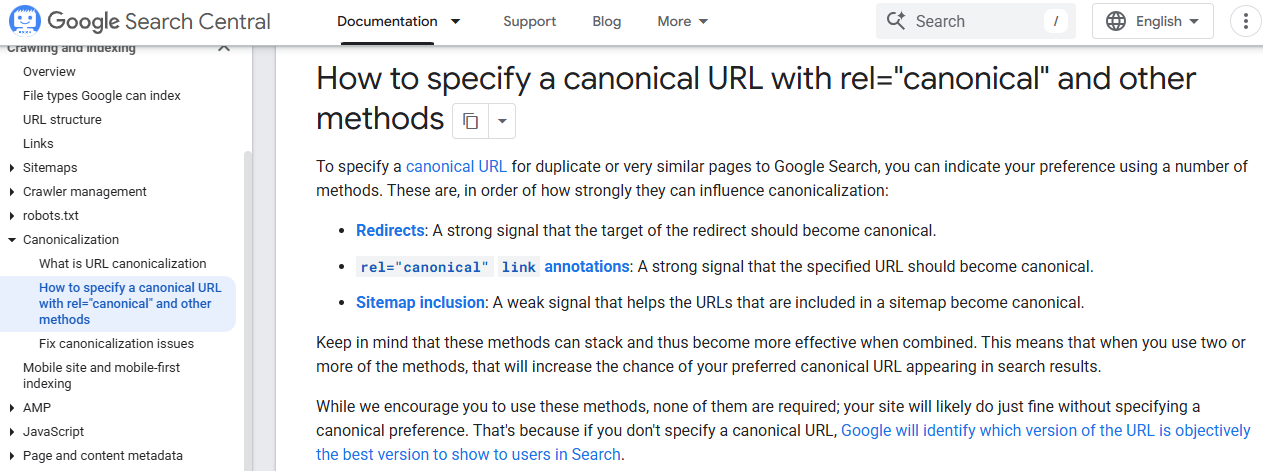
An unintended preferred URL or inaccessible destination deserves technical investigation before more outreach spending.
Verify That the Target Page Answers the Search
Open the current results for your priority query and inspect what they offer. If searchers want a product comparison, a short company introduction leaves their main questions unanswered. If they need a service provider in a specific region, vague coverage information makes it difficult to judge whether you qualify.
Compare the practical details: specifications, process, limitations, examples, availability, and the next step. Identify missing information that would prevent a visitor from completing their task. Links cannot write those answers on your behalf.
Separate content improvement from superficial expansion. Adding repetitive paragraphs to reach a word count does not resolve a missing explanation or unclear offer. High-DR backlinks support a page whose purpose you still need to get right.
Review Acquisition Methods When the Pattern Looks Unnatural
Inspect how the links were obtained if the portfolio contains unrelated articles, repeated commercial anchors, or placements offered without meaningful review. Google has explained that its link-spam systems can neutralise unnatural links. A link appearing in a tool does not guarantee that Google values it.
That does not mean a flat graph proves a penalty or that every unfamiliar referring website is harmful. Investigate the specific evidence and the methods used. Avoid starting a broad removal effort solely because an automated score labels links as suspicious.
Final Words
High-DR backlinks do not automatically improve rankings. A link can come from a strong domain and still provide little value if the page is irrelevant, poorly indexed, buried deep on the site, or surrounded by low-quality content.
The real value of a backlink comes from relevance, placement, authority, and whether the page itself has visibility and trust. So focus on earning links that actually make sense for your topic and can support your site’s authority over time.
FAQs
1. Does a Higher Domain Rating Guarantee Better Rankings?
No. It describes a backlink-profile measurement from an SEO provider, while your rankings depend on how your pages compete for particular searches. Use the score as context and assess actual page performance separately.
2. How Can You Tell Whether Google Ignored a Link?
You usually cannot verify the exact treatment of an individual link. Investigate technical issues, editorial context, and acquisition methods, but avoid presenting a flat ranking graph as definitive proof that Google ignored a specific placement.
3. Should You Remove Every Link That Has Not Produced Results?
No. A lack of attributable ranking movement does not establish that a link is harmful. Review the evidence and the method used to acquire it before considering removals or other corrective action.
4. Can Homepage Links Help a Service Page?
Your site structure can connect the homepage to relevant services and help visitors discover them. That does not create a guaranteed amount of ranking improvement, so evaluate the service page’s own content and search performance as well.
5. What Should You Change First When Rankings Stay Flat?
Begin with verifiable problems such as missing links, broken destinations, unintended indexing settings, or a page that fails to answer the query. Fix those findings before assuming that a larger link order is the solution.