
The placement report looks convincing: a recognisable publication, a prominent authority score, and your company listed beside it. Yet you still do not know who will read the article, why your business belongs in it, or where the link sends them. The number has answered a much narrower question than the report suggests.
Checking a publication’s authority metrics is a useful starting point, provided you continue into the actual coverage. To judge a HARO backlink properly, you need a page-level inspection that connects the publisher, the story, your contribution, and the destination readers will reach.
Check Whether the Story Belongs Near Your Business
Read the proposed subject and the publisher’s recent coverage in that area. The connection should be easy to explain without inventing an elaborate chain of associations. A procurement specialist discussing supplier due diligence has a direct reason to appear in an operations story. The same person offering generic holiday advice adds little evidence of professional expertise.
Relevance exists at several levels — the publication’s audience, the article’s topic, the quoted contribution, and the linked page. A general news website can publish a highly relevant industry feature, so a broad masthead does not automatically weaken the opportunity.
Before you commit expert time, apply a consistent opportunity review. Write down the reader need your contribution answers. If the only convincing benefit is the domain’s score, the brief needs closer examination.
Inspect the Publisher’s Editorial Standards
Look for clear authorship, identifiable publication ownership, coherent articles, and an understandable correction or contact process. Review several recent pieces from the relevant section. Do they use sources to explain the subject, or insert unrelated company mentions into thin text?
An unfamiliar publication is not automatically unsuitable. A specialist outlet can serve a valuable audience without widespread recognition. Judge whether it demonstrates knowledge of the subject, publishes original work, and gives readers a credible reason to return.
Ask how your contribution would be selected. Genuine editorial review allows the journalist to decline, edit, or omit it. A promise that any company can appear with any anchor text after paying a placement fee describes a different arrangement, regardless of the domain’s apparent strength.
Read the Exact Page and Surrounding Placement
Once coverage is live, inspect the sentence containing the link and the paragraphs around it. Your name or resource should serve an identifiable purpose: attributing an explanation, supporting a claim, or giving readers material they need. A HARO backlink hidden in a disconnected list tells a different story from a citation within a useful discussion.
Check whether the link points where readers expect. A reference to a downloadable checklist should not land on an unrelated homepage promotion. Accurate destination matching makes the citation more useful and gives you a clearer reason to maintain the receiving page.
Avoid rigid rules about paragraph position. An attribution near the end of an article can still be entirely appropriate. Your published quote and its context matter more than a simplistic demand that every link appear near the top.
Separate Traffic Estimates From Evidence of an Audience
Third-party organic traffic figures are estimates, and a large domain total says little about the audience for your particular article. Review whether the publication covers topics your customers follow and whether related pages appear for relevant searches. Use those observations alongside the estimates.
Where you have access, measure actual referral visits and what those visitors do on your website. An industry citation that brings useful enquiries has demonstrated a business outcome even if the referring article has modest search visibility. Conversely, a large estimated audience does not prove that your placement reached it.
Do not automatically reject a new article because a tool shows no page traffic. It has not had the same opportunity to attract visits as an established resource. Mark what remains unknown and revisit the page later.
Verify Accessibility, Indexing Evidence, and Link Attributes
Open the article without relying solely on the URL in a report. Check that it resolves successfully and that the link is present in the rendered page. Technical restrictions, redirects, or later edits can change what is actually available after the placement was recorded.
Treat indexing claims carefully when you do not control the publisher’s website. A search check or third-party tool provides clues, but it is not equivalent to access to the publisher’s Search Console inspection data. A missing result from a search operator alone does not conclusively establish non-indexing.
Inspect whether the link includes nofollow or sponsored. Google documents how to qualify outbound links, including paid placements.
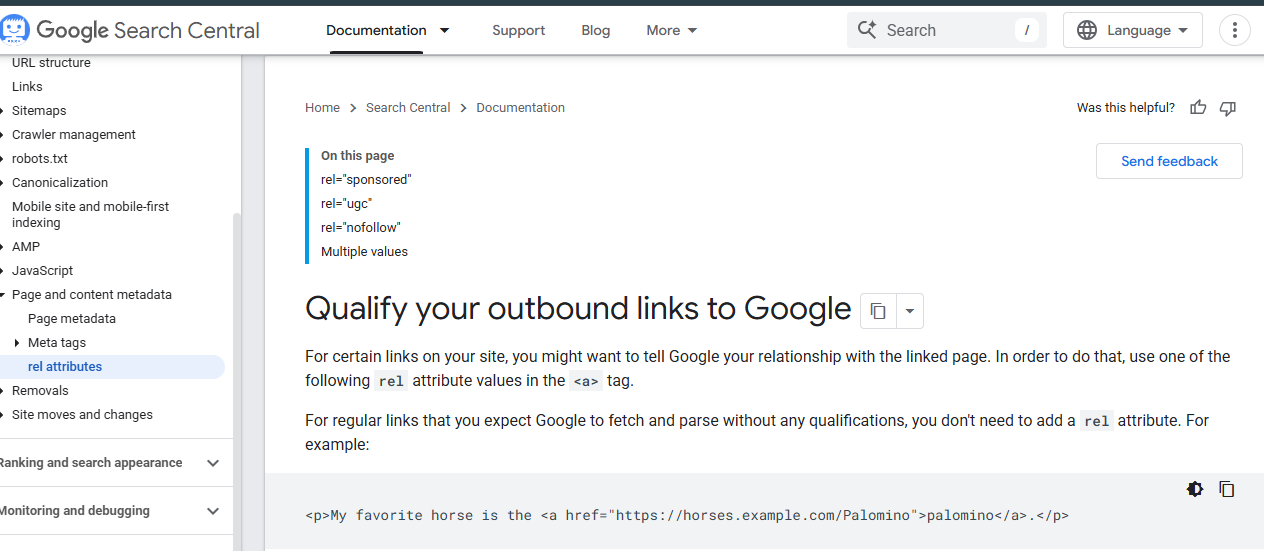
These attributes affect how you assess the SEO opportunity, but they do not erase possible referral or credibility benefits. Avoid assigning an invented amount of ranking credit to any attribute.
Keep an Evidence-Based Placement Record
Create a record containing the story topic, expert contribution, destination, editorial context, accessibility checks, and observed referral outcomes. Add DR as supporting information. Include unresolved questions so a polished report does not make uncertain facts appear confirmed.
Recheck the placement when you evaluate campaign performance. The article may have moved, the link may have changed, or the destination may no longer match the cited resource. A valuable HARO backlink requires continued attention to the pages involved, not a screenshot of a score taken on publication day.
Wrapping Up
Domain Rating can help you compare publications, but it should never be the final reason you value a HARO backlink. The real quality of a placement comes from how relevant the article is, how naturally your expertise fits the story, where the link appears, and whether the destination is useful to readers.
A strong backlink should make sense even without an authority score attached to it. Review the publication, page, context, link attributes, and real business outcomes together. That gives you a much clearer picture of whether the placement is building meaningful authority or simply adding another impressive-looking number to a report.
FAQs
1. Does Google Use Ahrefs Domain Rating?
Domain Rating is an Ahrefs metric, not a score supplied by Google. It helps you compare backlink profiles, but you should not interpret an increase as confirmation that Google has assigned your website the same improvement.
2. Is a Low-DR Publication Always a Poor Choice?
No. A specialist publisher could have a useful audience and strong editorial standards despite a modest backlink profile. Assess the story, readers, and citation before deciding whether the opportunity suits your business.
3. Does High Domain Traffic Guarantee Referral Visits?
No. A domain-wide estimate does not show how many people see your article or click its link. Track actual referral behaviour where possible and avoid treating the publication’s entire audience as your placement’s audience.
4. Should You Reject Every Nofollow Link?
That depends on your objective. It deserves a different SEO assessment, while relevant coverage can still introduce your expertise to readers. Agree on acceptable link attributes and reporting categories before the campaign begins.
5. What Is the Most Useful Question to Ask About a Placement?
Ask why the article needs your contribution and why the link belongs at that point. A clear editorial reason gives you a stronger basis for evaluation than a metric presented without the surrounding story.