
If you want your website to rank higher on Google, understanding its strengths is the first step.
That strength is often measured by something called SEO authority. Many website owners and marketers check this score to see how well their site can compete in search results.
The good news is, you don’t need to be a tech expert to find it out. With the right tools, you can quickly check your website’s SEO authority and know where you stand.
What is SEO Authority?
When we talk about SEO authority, we’re simply talking about how strong and trustworthy a website looks in the eyes of search engines.
A website with higher authority usually has a better chance of showing up at the top of search results compared to one with a lower score.
There are two common ways this authority is measured: Domain Authority (DA) and Domain Rating (DR). Moz created Domain Authority, while Ahrefs uses Domain Rating. Both scores run on a scale from 1 to 100, and the higher the number, the stronger the site is considered.
For example, big websites like news outlets or well-known brands usually have a high DA or DR because they’ve built trust, earned backlinks, and proven their credibility over time.
It’s important to remember that these numbers don’t come from Google itself. They’re created by SEO tools to help us get a sense of how a site might perform in search rankings.
While not official, they’re still useful when comparing your site against competitors or tracking your own growth.
From my own experience, I’ve found that checking a website’s authority gives me a clear idea of where we stand and what areas need work.
Why Checking SEO Authority Matters
Knowing your website’s SEO authority is more than just looking at a number. It tells you how much potential your site has to rank and compete in search results. When I check a site’s authority, it gives me a quick snapshot of how strong the site really is compared to others in the same space.
One of the biggest benefits is being able to size up the competition. If a competitor’s website has a much higher authority score than yours, you know you’ll need to put in more effort with backlinks, content, and SEO strategies to catch up.
On the other hand, if your score is close to or higher than theirs, you’re already in a good position.
Checking SEO authority also helps guide decisions. For example, when planning content or link-building, I can see whether the efforts are actually moving the needle. If the score is improving over time, it’s a sign that the strategies are working.
How to Check SEO Authority (Step-by-Step Guide)
Checking a website’s SEO authority is simple if you know which tools to use and how to read the results. Here’s a step-by-step process we follow.
1. Choose a Reliable Tool
The first step is picking the right platform. Popular choices include Moz Domain Authority Checker, Ahrefs Website Authority Checker, and Semrush. Each of these tools gives slightly different scores, but all of them are trusted in the SEO world. Personally, I like to stick to one tool consistently so the progress is easier to track over time.
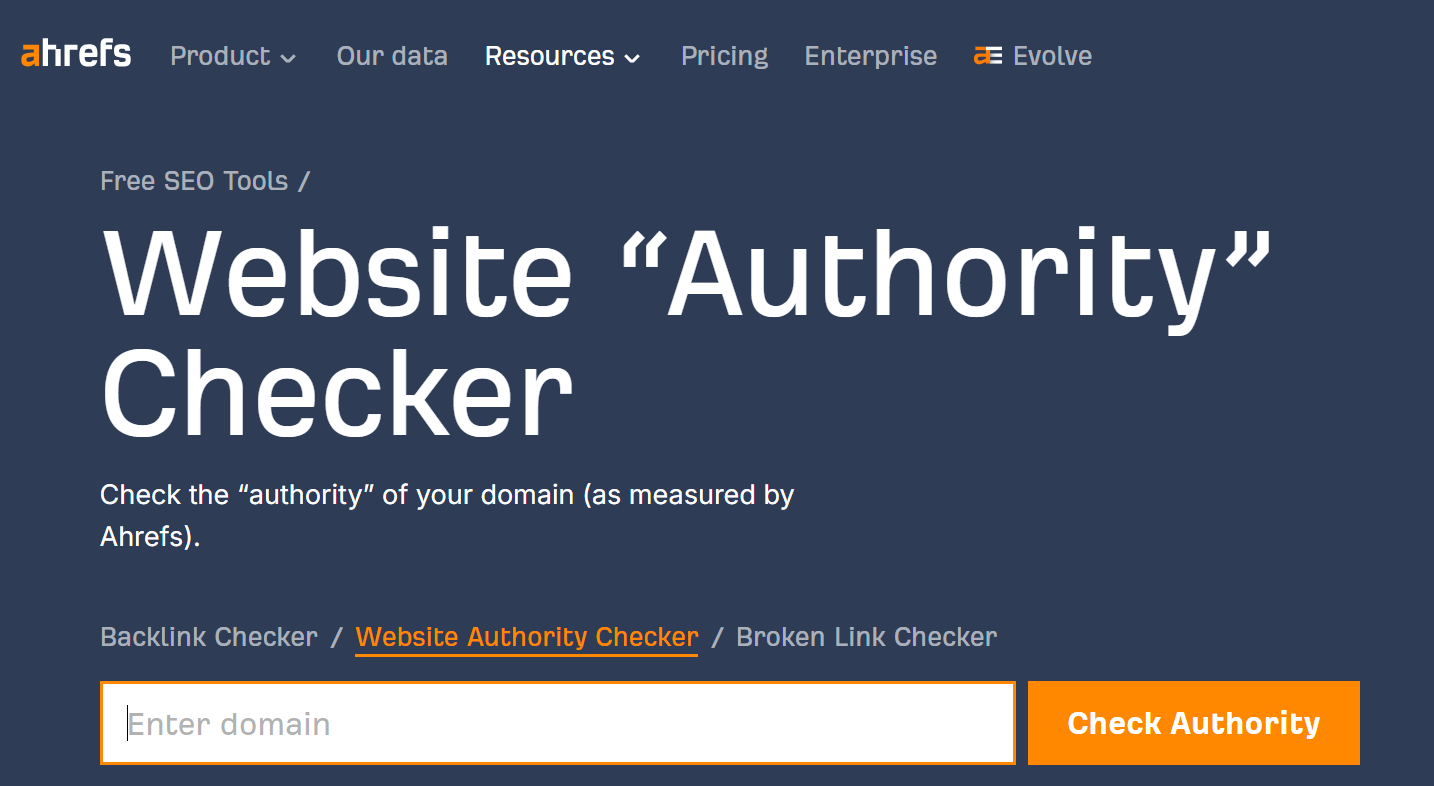
Source: Ahref
2. Enter the Website URL
Once you’ve chosen your tool, the next step is as simple as typing in the domain name you want to check. Whether it’s your own website or a competitor’s, the tool will quickly scan the site and prepare a report.
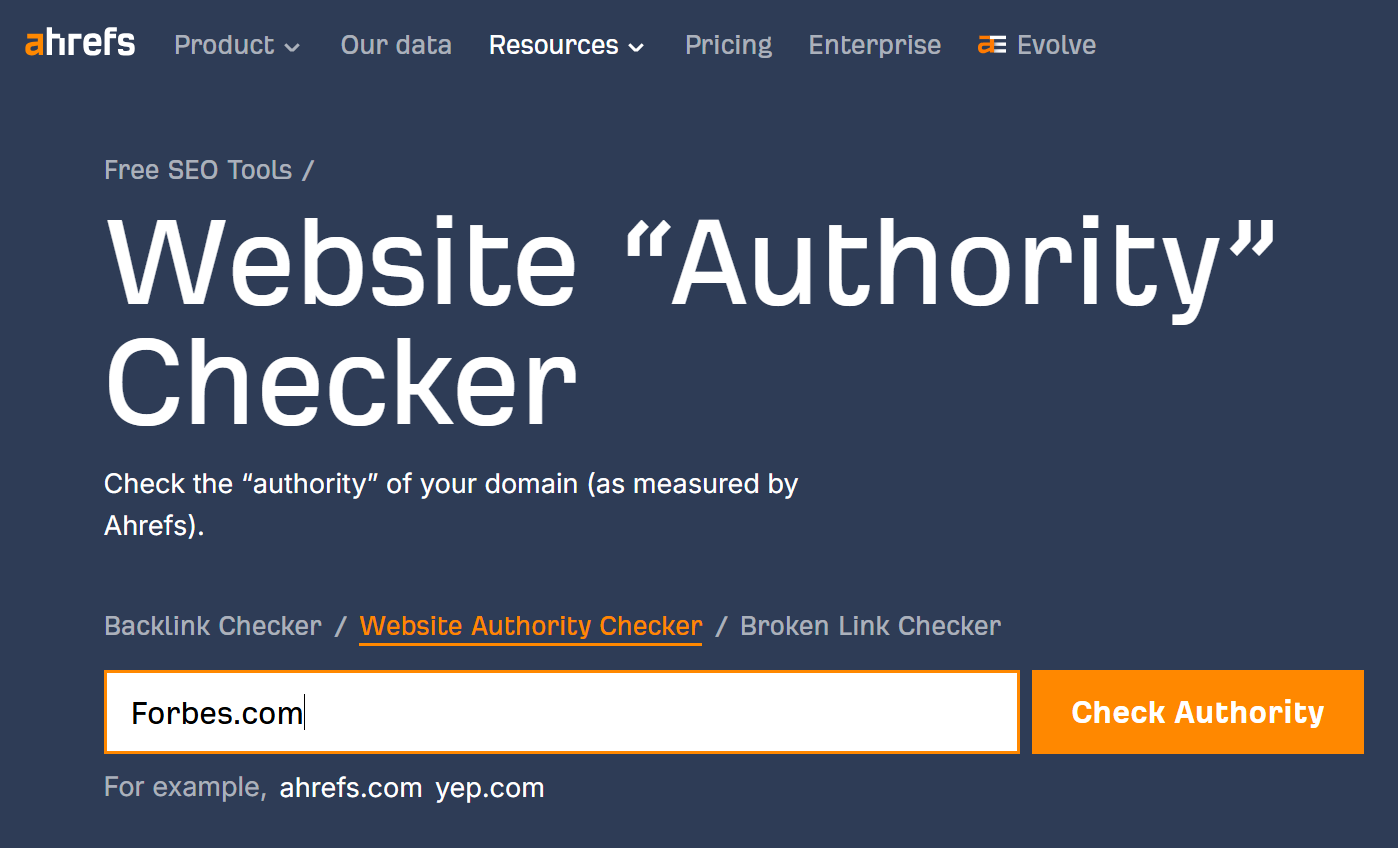
Source: Ahref
3. Review the Authority Score
After the scan, you’ll see a number between 1 and 100. This number is the website’s Domain Authority (DA) or Domain Rating (DR), depending on which tool you’re using. A higher score usually means stronger SEO authority and better chances of ranking higher in search results.
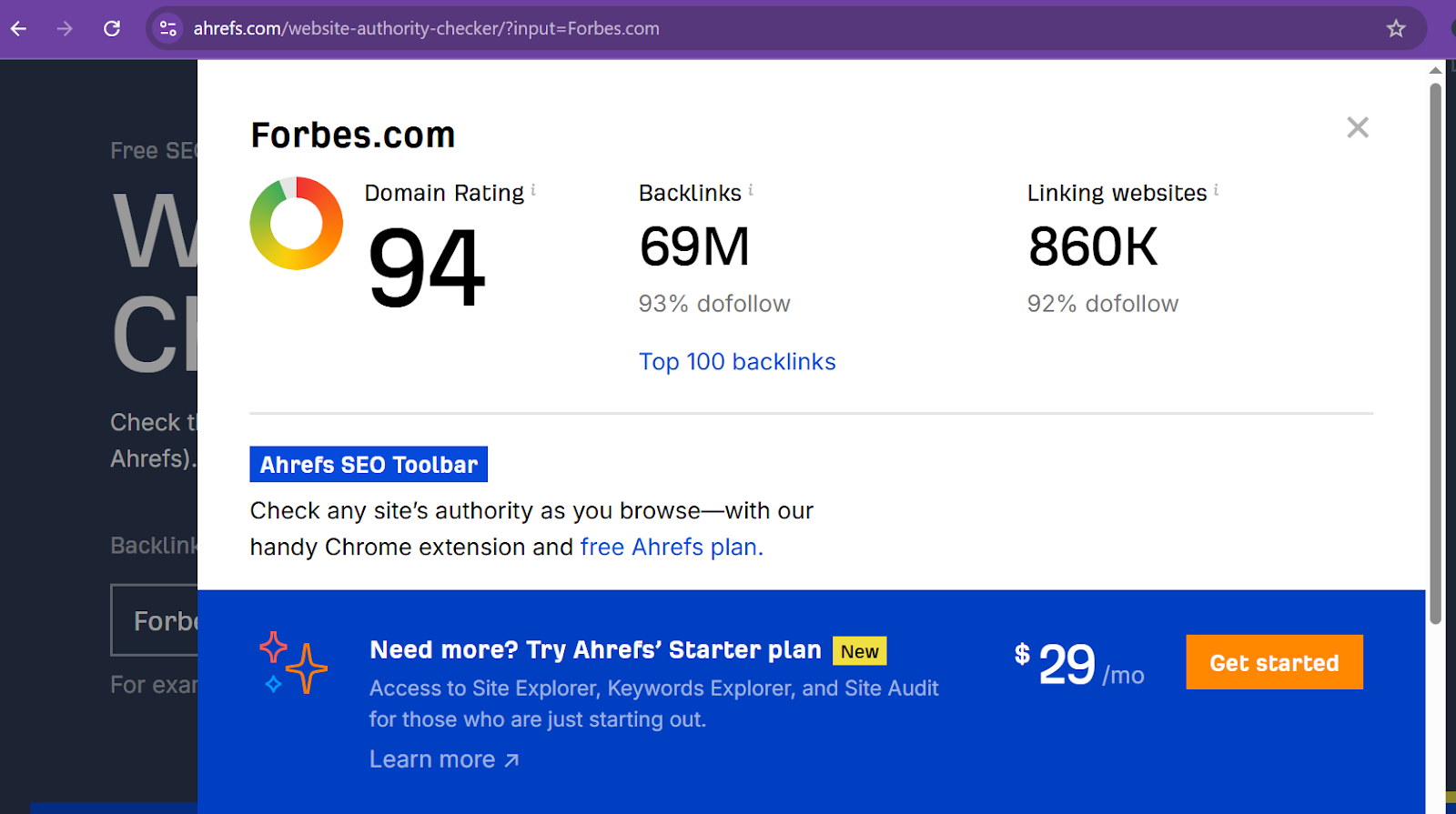
Source: Ahref
4. Look Beyond the Score
The real value comes from the details behind the number. Tools often show metrics like backlink profile, linking domains, and ranking keywords. These insights help you understand not just where your authority stands, but also what’s influencing it. For example, a website with a wide variety of quality backlinks is usually seen as more trustworthy.
5. Use Free or Paid Options
Most tools offer free checks with limited details, while paid versions unlock more data. In our case, we often start with free checks for a quick look and then use paid accounts when we need deeper reports.
How to Improve Your Website’s SEO Authority
Improving your website’s SEO authority takes time, but the effort is always worth it. A higher authority score usually means better chances of ranking, more visibility, and stronger credibility in your niche. Over the years, I’ve noticed that it’s not about quick fixes but about building steady, long-term growth. Here are some ways we approach it.
One of the most effective steps is building high-quality backlinks. Search engines see backlinks as votes of trust, but not all links are equal.
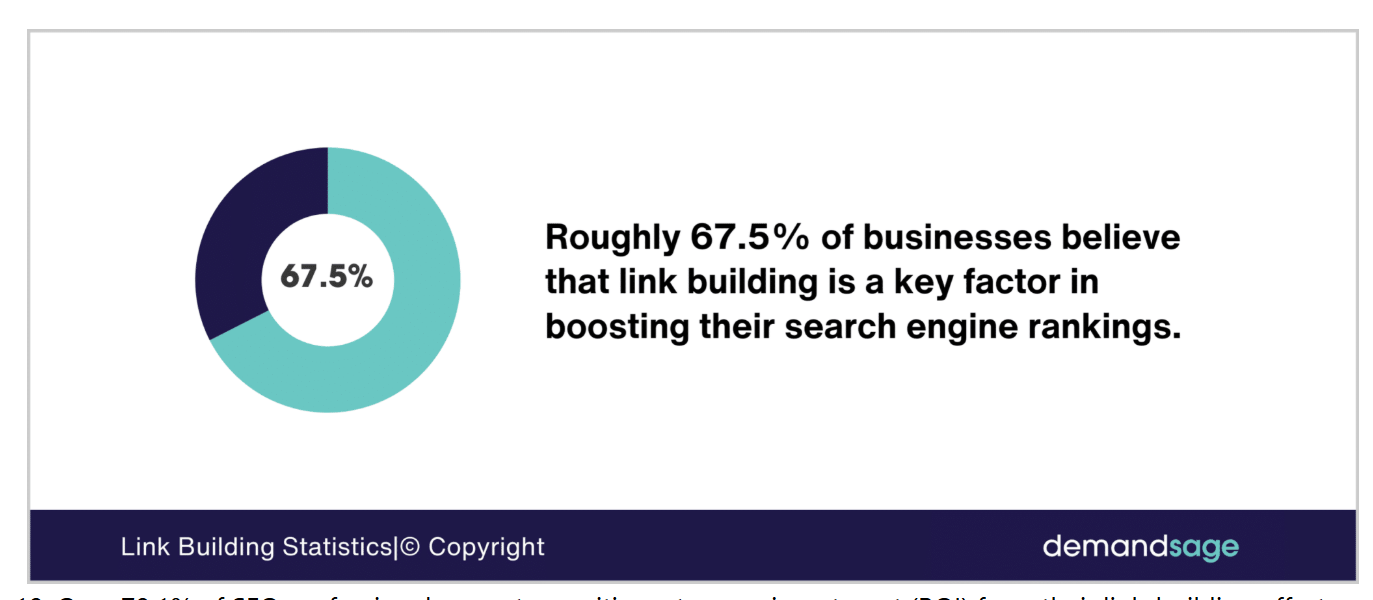
Source: Demandsage
Getting a link from a well-known, trusted site will carry far more weight than several links from weak or irrelevant websites.
I usually focus on earning links naturally by creating content that’s worth sharing, usually via HARO, Featured, or Qwoted. I call them digital PR backlinks, as they’re earned via great expert insights, so they carry more weight compared to bought backlinks.
Content that answers real questions, provides solutions, or shares unique insights naturally attracts readers and links as well. Over time, this strengthens your domain authority and keeps your site relevant in search results.
Don’t forget technical SEO. A slow website, broken links, or poor mobile performance can all hold back your authority. Fixing these issues makes your site easier to use and signals to search engines that your website is reliable.
Plus, work on your internal linking. Connecting your own pages with clear, helpful links spreads authority across your site and helps both users and search engines find your best content.
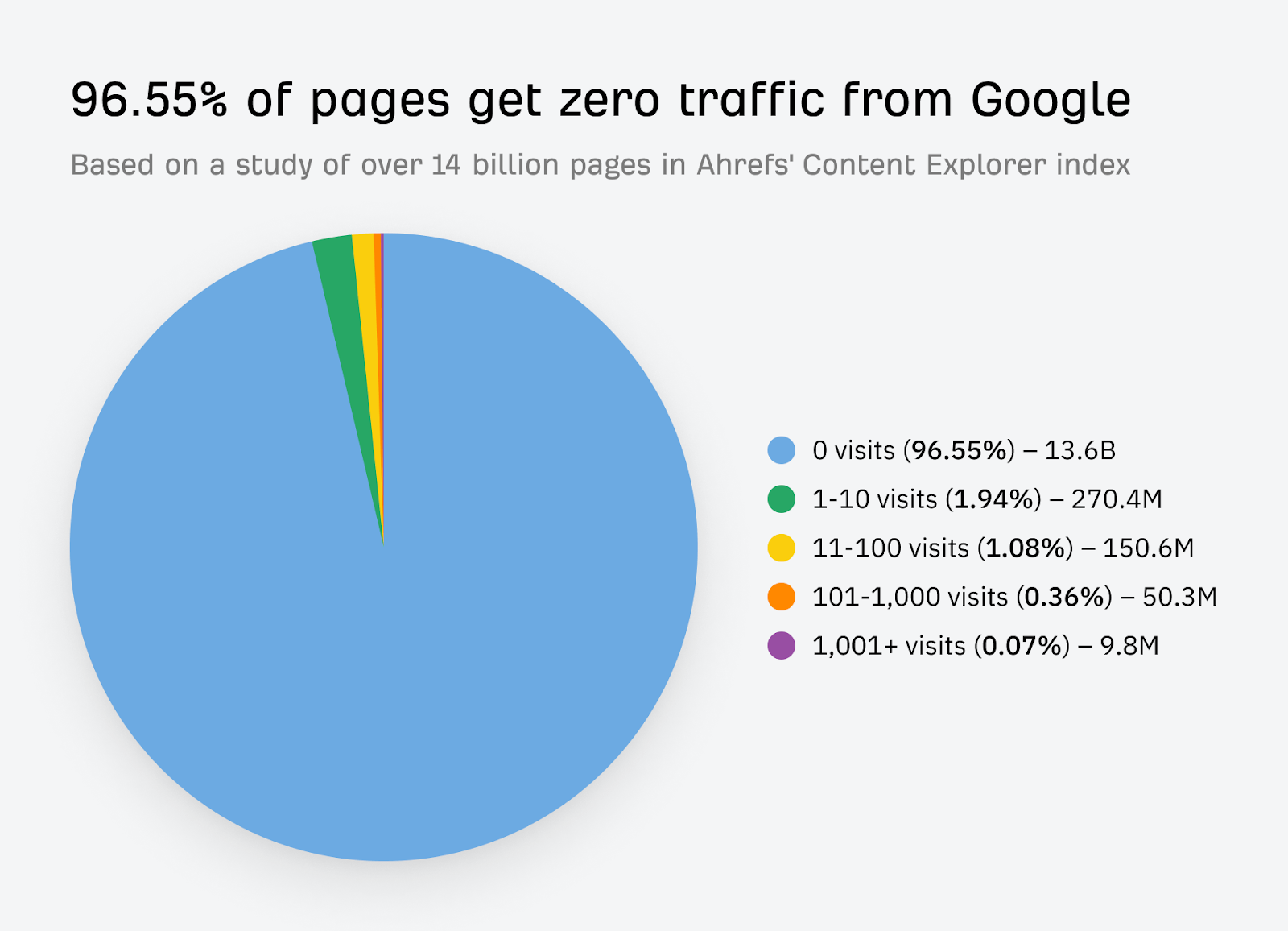
Studies from Ahrefs show most websites never get any traffic from Google. The reason being, most websites don’t focus on these key areas:
- Well-researched, valuable SEO Content
- Good quality backlinks
- Technical SEO
Source: Ahrefs
Final Thoughts
Checking the SEO authority of a website is one of the simplest ways to understand its strength and potential in search rankings.
By keeping an eye on metrics like backlinks, linking domains, and authority scores, you can track progress and plan smarter SEO strategies. Remember, improving authority is a long-term effort, but consistent work always pays off.
Looking to strengthen your online presence? Our team can help you grow your authority and visibility step-by-step, reach out today and let’s get started.
FAQs
How can I measure my website’s SEO authority?
One of the most popular ways to measure your website’s authority is with Authority Score (AS) from Semrush. This score looks at different factors, such as how many websites link to you, the quality of those links, and the amount of organic traffic your site receives. The score ranges from 0 to 100, higher numbers show that your site is stronger and more likely to perform well in search results.
Is there a free tool to check SEO?
Yes, there are free tools available. For example, SEOptimer is a free SEO audit tool that checks over 100 factors on your website. It then gives you an easy-to-understand report with practical tips to improve your site’s SEO and visibility in search engines.
Can I do SEO on my own?
Absolutely! You don’t need to hire an expert to get started with SEO. With the right guides, tools, and some consistent effort, you can learn and apply SEO best practices yourself. Many website owners successfully manage their own SEO and see great results over time.
How can I find out who owns a website?
To check the owner of a domain, you can use a WHOIS lookup tool. Simply enter the domain name, and it will show details such as the registrar and registration dates. However, personal contact information is often hidden due to privacy protections, so you may only see limited details.
Can SEO really make money?
Yes, SEO can definitely help you make money. Once your site ranks well on Google and starts attracting steady traffic, you’ll have many opportunities to earn. This could be through ads, affiliate marketing, partnerships, or even selling your own products or services. A strong SEO strategy often leads to long-term income potential.