
HARO emails can quickly pile up. Every day you get a long list of journalist queries asking for expert quotes. Some are from well-known media sites, while others come from smaller blogs. If you try to reply to every single request, it can take hours and still not bring the kind of results you want.
The truth is, not every HARO opportunity is worth your time. Some mentions can bring strong backlinks, authority, and real traffic, while others may not have much SEO value at all. That’s why many people who do HARO regularly don’t respond to everything they see.
Instead, they look at each query and quickly decide which ones are worth answering. In this guide, we’ll explain how to prioritize HARO queries by SEO value and use a simple quality scoring system to pick the best opportunities.
The “Quality First” Scoring Framework (1–10 Scale)
To make the most of HARO, rank queries before responding. The “Quality First” framework helps you quickly identify which pitches are worth your time. This scoring system uses three main factors: authority, relevance, and link type.
Authority is measured by the publication’s Domain Rating (DR) or Domain Authority (DA). High-authority outlets like Forbes or Business Insider score around 9–10, mid-tier niche blogs score 6–8, and unknown or low-quality sites fall in the 1–5 range.
Relevance considers how closely the query aligns with your niche and expertise. Directly related queries that build credibility score 10, broadly related ones score around 5, and unrelated requests score 1.
Link type examines whether the potential backlink is dofollow or nofollow. Dofollow links, which pass SEO value, score 10, while nofollow or user-generated links score lower. By combining these three factors, you can assign a total score to each HARO query, helping you focus only on high-value opportunities that improve both authority and SEO impact.
And don’t forget the value of high-quality backlinks. Backlinks from strong publications can make a major difference. Recent industry studies from Ahrefs show that 96.55% of pages get no organic traffic from Google.
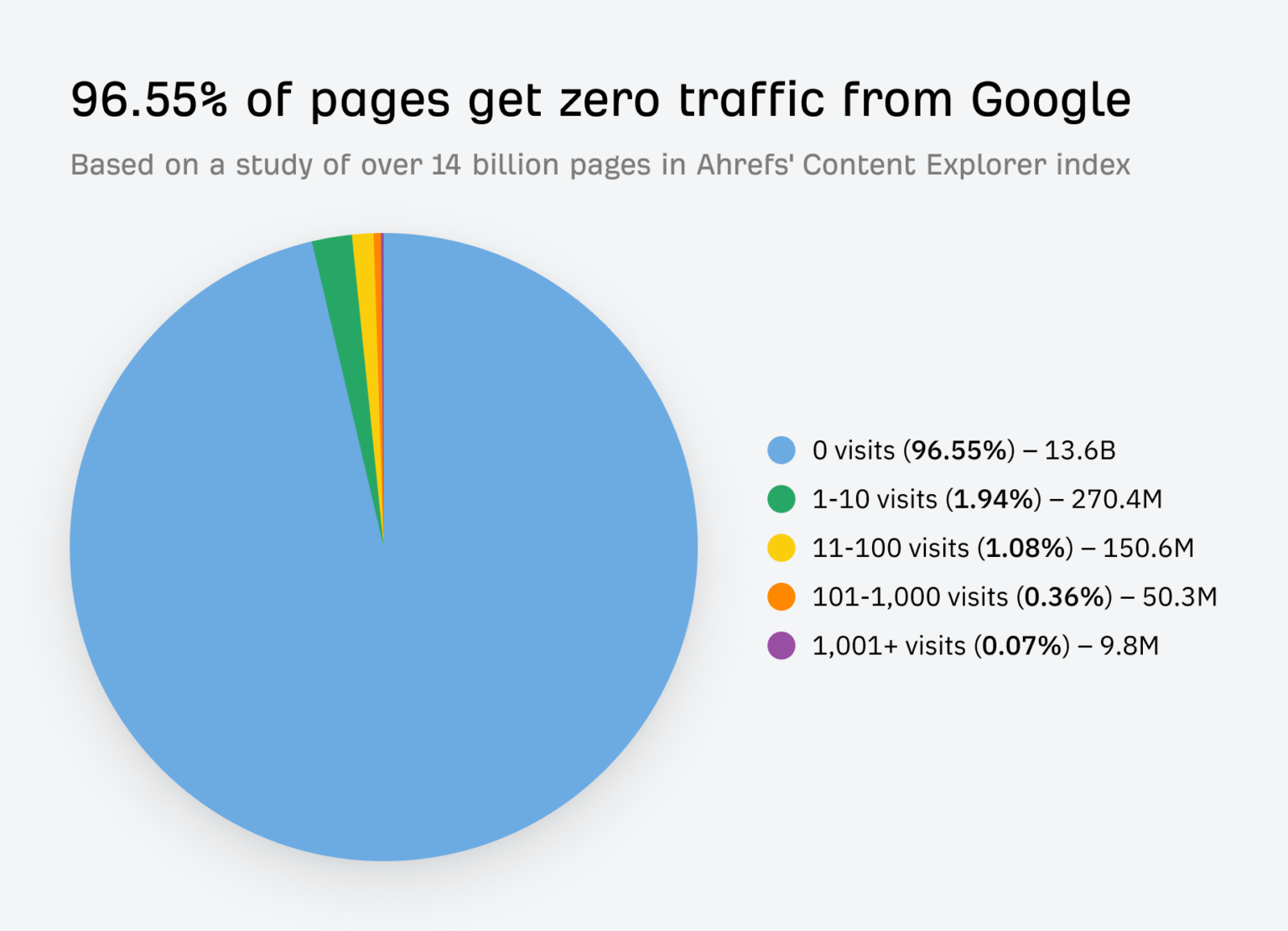
And the 2nd major reason behind this is backlinks.
Prioritization Tiers: Actionable Checklist
Once each HARO query has a score, the next step is to organize them into clear priority tiers. This makes it easy to decide which queries deserve immediate attention and which can be skipped.
- Priority 1 – The “Gold” Tier: These are top-tier publications with high Domain Rating (DR 70+), highly relevant to your niche, and usually with tight deadlines. Respond immediately, ideally within 30–60 minutes, to maximize your chances of being selected.
- Priority 2 – The “Solid” Tier: Mid-authority sites (DR 40–60) with strong relevance fall here. These queries still offer excellent SEO value and reliable dofollow links. Respond within 2–4 hours for the best results.
- Priority 3 – The “Branding” Tier: These include major outlets that are not fully aligned with your niche. While the SEO value may be lower, they provide brand exposure and social proof. Respond if time allows.
- Priority 4 – The “Skip” Tier: Low-authority sites, unrelated queries, or those likely to offer nofollow or UGC links. These take effort but deliver minimal SEO benefit, so it’s best to ignore them.
Key Evaluators for High-Value Links
To make sure time is spent wisely, assess each opportunity before responding. Start by checking the URL in the query — if the journalist lists the outlet, quickly verify its authority and reputation. Reputable sites with strong Domain Ratings (DR) typically provide higher SEO value.
Next, analyze the reporter or outlet. If the journalist is anonymous, research their previous work or contributions to confirm they consistently produce quality articles. This helps avoid wasting time on low-value or unreliable sources.
Plus, consider time-sensitive deadlines. Urgent queries often indicate that the journalist is seeking top-quality input quickly. Being among the first to respond can give you an edge over competitors while targeting high-value links.
How to Maximise Success for High-Value Queries
Here’s how to maximize success.
Respond as Early as Possible
Timing can make a big difference with HARO. Journalists often start reviewing responses soon after the query is sent, and many of them choose quotes from the first batch of replies they receive.
If you wait too long, your pitch may never get seen. Setting alerts and checking HARO emails quickly helps you respond earlier and increases the chances that your response will actually be read.
Give a Clear, Ready-to-Use Quote
Journalists prefer responses that are easy to include in their article. Instead of writing long pitches, try to provide a short insight that can work as a direct quote. Clear, simple responses save journalists time and make their job easier. When your answer is structured like a quote, there’s a much better chance it will be copied into the final story.
Focus on Adding Real Insight
High-value queries often come from major publications, so generic answers usually don’t stand out. Try to share a practical insight, quick example, or a short explanation based on real experience. When your response adds something useful to the story, it becomes more valuable to the journalist. Helpful insights make your pitch easier to use and more likely to be selected.
Conclusion
HARO can work really well, but only if you focus on the right queries. Many people try to reply to every request, and that usually takes a lot of time without bringing good results. A better approach is to choose the opportunities that actually matter. Look at the publication, the topic, and whether the mention could bring a high-quality backlink.
When you start picking queries more carefully, HARO becomes much easier to manage. Instead of sending many random responses, you spend your time on the ones that can bring real media mentions and better SEO value.
FAQs
1. What is the best way to prioritize HARO queries for SEO?
The best way is to use a scoring system that considers Domain Authority, relevance to your niche, and link type. This ensures you focus on queries that provide the most SEO value.
2. Should I respond to every HARO query I receive?
No. Only respond to queries that are highly relevant and have a strong chance of providing a dofollow link or significant brand exposure. Low-value or off-topic queries are often a waste of time.
3. How do I identify high-value HARO queries quickly?
Check the publication’s Domain Rating, evaluate the reporter or outlet, and consider the urgency of the deadline. High-DR sites with tight deadlines often deliver the best opportunities.
4. What common mistakes reduce the value of HARO responses?
Being slow, sending generic or salesy pitches, ignoring instructions, or submitting poorly formatted responses can lead to rejection and hurt your chances of future placements.
5. Can prioritizing HARO queries really improve SEO results?
Yes. By focusing on high-authority sites and relevant queries, you gain stronger backlinks, improve domain authority, and increase traffic while avoiding wasted effort on low-value mentions.