When someone searches your founder’s name, what subject appears beside it? Perhaps the coverage shows a clear pattern of expertise. Perhaps it jumps from productivity tips to travel advice, leaving a prospective customer unsure what the person actually knows. Both businesses have media mentions, but the public record tells very different stories.
An effective subject focus gives those appearances a purpose. You want relevant people to recognise your business for knowledge that matters to them. That requires a deliberate choice of topics, credible experts, and contributions that deepen the evidence each time your name appears in print.
Build a Recognisable Record of Expertise Around One Subject
You build topical authority through a consistent body of useful work and relevant independent recognition. Media mentions contribute when journalists repeatedly draw on your actual knowledge within a coherent subject area. The aim is to make your expertise easier for readers to understand and verify.
Do not treat this as a hidden score that increases every time your preferred keyword appears beside your brand. Google’s documented news topic authority system concerns expert publications and news-related queries. It does not establish a universal quota of expert mentions that makes every business an authority in general search.
So create a public record that supports your claimed expertise. Any search benefit belongs within a wider assessment of your content, website, links, and competition.
Define the Subject Closely Enough to Be Useful
Choose an area where your company has substantial experience and your customers need informed answers. “Business” is too broad to guide a media campaign. “Managing product returns for online retailers” identifies a problem, an audience, and a field of practical knowledge.
Map the related questions within that area. A returns specialist could address warehouse inspection, preventable customer confusion, restocking decisions, and communication after an item arrives. Those angles share a core subject while giving journalists different material for different stories.
Assign each angle to a qualified person. Your expert profiles should explain the experience behind the contribution without inflating someone’s role. A coherent subject plan becomes unconvincing if the same spokesperson is presented as an expert in areas they have never worked in.
Prepare Evidence That Gives Your Quotes Substance
Collect examples of decisions, recurring problems, and lessons the expert can discuss accurately. Record the circumstances that make each example useful, including its limits. An observation from a particular operating environment should not become a universal rule just because the shorter version sounds stronger.
For the returns specialist, a useful example might explain why a vague item-condition label led warehouse staff to inconsistent decisions. The contribution could describe the information missing from the process and how clearer categories improved handling. Only claim an outcome you can support, and protect customer information when preparing the material.
This evidence makes topical authority concrete. You are showing how someone understands a problem through experience, which gives both the journalist and the eventual reader something to evaluate beyond a confident job title.
Pursue Different Questions Within the Same Area
Select requests that let your expert add something distinct to the existing record. Repeating the same broad opinion in unrelated stories produces more appearances without much additional evidence. Aim for contributions that answer adjacent questions or explain another dimension of the subject.
Read the journalist’s recent work and the requirements of the specific request. Supply an answer that fits the story, even when that means leaving a favourite talking point unused. Useful quote development starts with what the reader needs to understand, then draws on the expert’s relevant experience.
Seek independent editorial decisions across suitable publications. A syndicated article creates additional distribution, but it is not the same as several reporters separately selecting your expertise. Record that difference so your coverage review reflects the breadth of recognition honestly.
Keep the Expert’s Identity and Website Consistent
Use an accurate name, role, company association, and biography across your public profiles. Update genuine changes promptly, especially when someone leaves the business or their responsibilities change. Consistency helps people verify the person behind a quotation without implying that identical wording itself guarantees search visibility.
Maintain substantial resources on your website that develop the same subjects in greater detail. A quoted explanation of returns inspection should lead an interested reader to useful related material, not a generic archive with no clear connection. Add accurate authorship and review information where it helps visitors assess the content.
Google’s helpful-content guidance encourages clear information about who created content. It also explains that E-E-A-T is not a single ranking factor. Use those principles to improve transparency and usefulness, without selling media appearances as a guaranteed increase in an E-E-A-T score.
Connect Media Recognition to Buyer Confidence
Relevant coverage gives your sales and service teams public material to share when customers ask about your experience. Some readers influence the purchase internally without appearing in your sales conversations; buyer research often calls these people hidden buyers. Link to the original article and explain the subject your expert contributed to. Avoid implying that a publication endorses your entire company simply because it used a quotation.
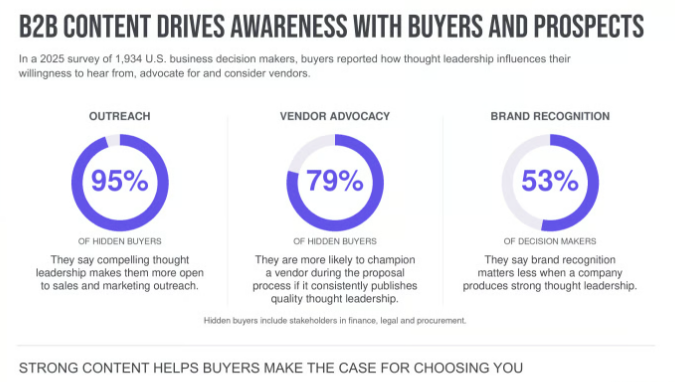
Edelman’s discussion of its 2025 research reports that 79% of hidden buyers are more likely to advocate for a vendor during a request-for-proposal process when it consistently publishes quality thought leadership.
Topical authority should help someone understand why your knowledge matters to their decision. Keep that purpose visible when choosing which coverage to feature in a proposal, expert biography, or relevant website page.
Review the Depth of Your Coverage, Not Just Its Volume
Maintain a record of each mention’s subject, expert, supporting evidence, publisher, and destination. Read the collection periodically as a prospective customer would. Does it demonstrate useful knowledge across your chosen area, or merely repeat the same general statement under different headlines?
Look for unanswered questions that deserve original resources or a better-prepared spokesperson. Track repeat journalist requests, relevant referral visits, and enquiries mentioning your expertise. Review search visibility for related pages separately so you do not attribute every improvement to the media campaign.
Be cautious about promises of automatic AI visibility. Published coverage creates material that systems could potentially retrieve, but inclusion in an AI answer depends on the product, query, sources, and timing. The durable asset you control is the accuracy and usefulness of your public record.
Become Easier to Recognise for the Right Expertise
Building topical authority through expert media mentions is consistently showing your expertise on subjects that closely match your business, experience, and audience. When trusted publications quote you on relevant topics, those mentions can strengthen your credibility with readers, journalists, and search engines.
Focus on answering media requests where you can provide real experience, specific examples, and useful insights. Over time, repeated mentions around the same subject can help reinforce your expertise and brand association.
FAQs
1. Do Repeated Brand Mentions Automatically Improve Rankings?
No. Repetition alone does not establish a ranking benefit. Relevant coverage adds public evidence of expertise, while search outcomes depend on your pages and the broader competitive and technical conditions affecting them.
2. Should Every Expert Discuss the Same Narrow Topic?
Your campaign needs a coherent subject, but different specialists can address the parts they know directly. Assign contributions according to experience so the overall coverage has depth without making any person appear universally qualified.
3. Do Unlinked Media Mentions Have a Role?
They provide published evidence that a journalist used your contribution, which interested readers can evaluate. Keep that credibility role separate from backlink delivery and avoid assuming an unlinked mention passes the same search signals as a hyperlink.
4. Can You Reuse the Same Quote Across Requests?
Use verified background facts when relevant, but write each answer for the specific question. Recycled statements often miss the story’s purpose and give you little new material to add to your public record of expertise.
5. How Do You Know Whether Your Subject Focus Is Working?
Look for suitable repeat enquiries, broader coverage of related questions, and customers recognising your relevant experience. Review search and referral data alongside those observations while keeping the limits of attribution clear.