


.png)
Two experts start pitching journalists on the same day. One answers everything she can, marketing today, leadership tomorrow, productivity on Friday. The other answers only questions about pricing strategy for software companies, and lets everything else go, even queries she could handle easily.
A year later, the generalist has a scattered handful of small placements. The specialist gets emails that start with “writing about SaaS pricing again, can I get your take?” Same effort, completely different outcomes, and the reason is worth understanding properly, because the answer to this question shapes everything about how you should pitch.
The Short Answer, Then the Interesting Part
Yes, famous in one niche beats average in five, and it's not close. But the reason isn't the motivational-poster version about focus. It's mechanical. Recognition compounds inside a lane and evaporates across lanes, and every system that decides who gets coverage, journalists, editors, algorithms, AI assistants, is built to reward the compound.
The interesting part is why, because once you see the machinery, you'll also see the exceptions, and there are real ones. Let's take the machinery first.
Journalists File You Under One Word
A reporter who quotes you saves you in their head, and often their contacts, under a label. “Pricing person.” “Payroll expert.” “Warehouse guy.” That label is what gets you called again, directly, with no competition. Spread across five niches and no label sticks, because you were never the same thing twice.
The averages show what you're up against without that label. Research found that journalists respond to roughly 3% of what they receive. That's the generalist's world, competing at the base rate forever, on every single pitch. The specialist's world is different. After a few placements in one lane, an increasing share of their coverage comes from direct requests, where the response rate isn't 3%. It's whatever they decide it is.
Credits Only Stack in the Same Pile
Every placement improves your next pitch, but only inside the same lane. “Quoted in three logistics publications” makes you the obvious pick for the fourth logistics query. “Quoted once each in logistics, wellness, and crypto” makes you the obvious pick for nothing. The credits exist either way. They just don't stack unless they're in the same pile.
This is why specialists accelerate while generalists stay flat. Placement four comes easier than placement one, placement ten starts feeling routine, and somewhere along the way the outlets get bigger, because major publications check whether you've been quoted before and by whom.
AI Search Only Counts Repetition
There's a newer force making the niche answer even stronger. AI assistants recommend experts and brands based on association, which they learn from repeated mentions connecting a name to a topic across the web. Ten quotes about one subject teach the machines exactly who you are. Ten quotes about ten subjects teach them nothing, and you stay invisible in the answers your future clients are reading.
This changed the value of every placement. A niche mention now pays twice, once with the human audience and once in the association machines build. Scattered mentions pay half of once. If you're deciding where to concentrate this year, the machines have raised the price of being unfocused.
The Cost of Spraying Is Higher Than Zero
Being average in five niches isn't just weaker. It's actively risky, because off-lane pitching reads as spam to the people receiving it. Fractl's survey of 500 writers, editors, and publishers found 53% had blacklisted at least one person that month over bad pitches.
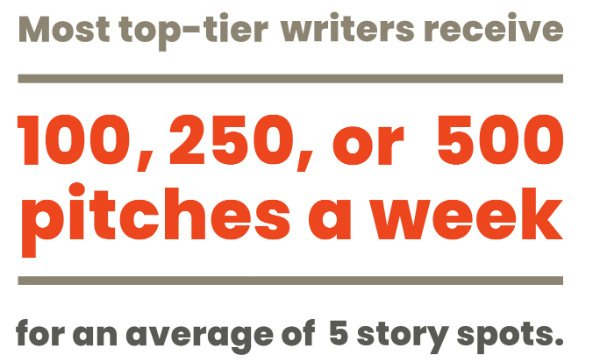
Blacklists are personal, they travel between colleagues, and stretched, generic responses are exactly what fills them.
So the generalist isn't collecting five small reputations. They're often collecting one bad one, as the name that shows up everywhere with nothing specific to say. The specialist's discipline of declining off-lane queries, which feels like lost opportunity, is actually reputation protection.
When Five Niches Actually Makes Sense
Now the honest exceptions, because the one-lane rule bends in a few real situations. Agencies and consultancies with multiple genuine specialists can run multiple lanes, one per person, and it works because each name stays narrow even though the company doesn't. The rule is per person, not per business.
Adjacent lanes can also share a foundation. Pricing strategy and SaaS metrics. Payroll and small business compliance. If two topics share an audience and your credibility in one honestly supports the other, that's one wide lane, not two. The test is whether the same journalist could plausibly call you for both. If yes, it's a lane. If a different reporter in a different world covers it, it's a spray.
And early on, a short exploration phase is fine. Two or three months of answering slightly wider, watching where you win and what you enjoy writing, is research, not spraying. The mistake is staying in exploration forever, because the compounding only starts when the choosing stops.
How to Pick the One, If You're Torn
Three questions settle it for most people. Where is your experience genuinely deepest, meaning you could survive any follow-up question a skeptical journalist asks? Which topic do your buyers actually care about, since fame in a niche that doesn't feed your business is a hobby? And where can you keep producing specifics, numbers, stories, and opinions, for years without running dry? The overlap of those three is your lane.
Then commit visibly. Same title everywhere, a bio built around the lane, and a pitch routine that only fires on matching queries.
Wrapping Up
Famous in one niche beats average in five because every system in this game pays for repetition. Journalists file you under one label, credits stack in one pile, machines learn one association, and blacklists punish the sprayers. Depth isn't a style preference. It's how the machinery works.
The important part is what it asks of you, which is saying no to queries you could win, over and over, while the compound builds. But run the two experts forward five years. One is somebody in something. The other is nobody in everything, with more total pitches sent. Choose your something, and start being repetitive about it on purpose.
FAQs
1. How narrow should my niche actually be?
Narrow enough that you're among the obvious best answers for its queries, wide enough that queries actually appear. “Marketing” is too wide. “Email subject lines for dentists” is too narrow. “Email marketing for e-commerce” sits in the workable middle. Adjust based on real query flow over a month or two.
2. How long before niche focus starts paying off?
First placements typically come within weeks, and the compounding effects, easier wins, bigger outlets, direct requests, usually show inside three to six months of consistent, focused pitching. The timeline shortens as credits stack, which is exactly the point of stacking them in one place.
3. Can I change my niche later?
Yes, and it's easier than starting fresh, because you already understand the machinery. The smoothest changes move to adjacent territory where some credibility carries over. A sharp jump to an unrelated field mostly restarts the clock, so pick with some care the first time.
4. What if my niche has very few queries?
Widen one level, keeping your angle. A restaurant accountant answers general small business finance queries through restaurant examples, which builds the right association anyway. Also monitor several platforms at once, since niche queries are scattered and the total flow across platforms is usually enough.
5. Does niche fame help my company or just me personally?
Both, heavily. Your title and company ride along with every quote, so your personal association pulls the brand into the same topic in journalists' minds and AI systems' answers. Many companies now build expert lanes for two or three team members deliberately, because the halo compounds for the business.



.png)

