



A journalist posts a query at 9 a.m. By lunch, there are two hundred responses in their inbox, and they'll use two of them. Everyone else wrote something, sent it, and never heard back, most without ever learning why.
The why is almost never talent. Published pitches share a specific anatomy, six parts doing six different jobs, and once you see the parts, you can build the whole thing differently instead of hoping. This guide dissects a winning HARO pitch piece by piece… what each element must do, what kills it, and what the journalist is actually thinking while skimming yours.
Start With the Reader: A Journalist on Deadline
Every part of the anatomy makes sense only against one picture… a writer with a story due, scanning hundreds of replies at speed, looking for something they can paste into their draft with minimal work. They're not grading your writing. They're shopping for a usable quote, and every second your pitch costs them counts against you.
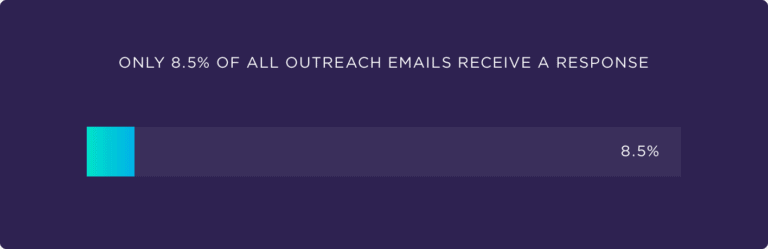
A research even found that 8.5% of all outreach emails receive a response.
A HARO query flips it… the journalist is actively asking. Your only competition is the other responses, and most of them, as you're about to see, disqualify themselves in the first two lines.
The Subject Line That Confirms Relevance
The subject line has one job, and it isn't creativity. It's instant confirmation that your reply matches their query. The reliable format is the query's own topic plus your specific angle — “Re: Remote work burnout — data from managing 40 remote employees.” The journalist recognizes their query and sees your credential.
But here’s what kills it — cleverness, vagueness, or your company name as the hook. “Great insights for your article!” tells them nothing and reads like the other fifty identical subject lines above it. Boring and exact beats clever and vague in every inbox on earth.
The First Two Lines, Where Most Pitches Die
Open with the answer. Not with your name, not with how much you loved their publication, not with your company's founding story. The direct answer to their question, stated in one or two sentences, as if they had asked you across a table.
Because journalists skim tops. If your first lines contain a usable answer, they keep reading. If they contain a warm-up, they scroll to the next email, and no brilliance further down gets discovered. Introduce yourself in one clause at most, “As someone who's run payroll for 200-person companies for a decade, the real cause is usually...”, and let the credential ride inside the answer instead of blocking it.
The Quotable Middle
The middle of the pitch is where you earn the selection, and the winning material has a texture generic responses can't fake: a specific number, a short real example, a clear opinion, or a first-hand observation. “Communication is important for remote teams” gets deleted. “We cut meeting hours 30% and our delivery speed went up, and the reason surprised us” gets quoted.
Write it in blocks a journalist can lift whole. Two to four tight paragraphs, each one a complete, self-contained thought, in a conversational voice that sounds like a person talking. Read it aloud once; if it sounds like a press release, rewrite it until it sounds like you. And keep the total short. Somewhere between 150 and 250 words is the zone where complete and skimmable overlap, and almost nothing published from these platforms needed more.
This is also where AI shortcuts backfire hardest. With roughly half of new web content now machine-generated, journalists have become expert detectors of the smooth, empty paragraph. The flood raised the value of the one thing it can't produce, something only you could have said. Your specific numbers, your actual experience, your honest opinion, that's the entire moat.
Credentials That Fit in Two Lines
After the substance, give them exactly what they need to cite you — name, title, company, and the one credential that makes you qualified for this specific topic. Two lines, ready to paste. “Sara Malik is Head of Operations at Northline Logistics, where she manages last-mile delivery across 12 cities.”
But don’t add a paragraph of biography, a list of awards, or links to five properties. One relevant credential beats six impressive ones, because the journalist needs a source descriptor, not a résumé. If they want more, they'll ask, and a journalist asking follow-up questions is the best outcome a pitch can have.
Formatting for the Copy-Paste Test
Before sending, run the test that decides everything: could the journalist select your middle paragraphs, paste them into their draft, and publish with zero edits? That means clean plain text, no attachments, no embedded images, quotes punctuated properly, and no phrases that only make sense as an email (“as we mentioned above” dies inside an article).
Skip the promotion entirely. No product plugs, no “learn more at our website,” no second link beyond what identification requires. Promotional pitches get deleted on principle, because using one signals you misunderstood the transaction… they need expertise, and the link and mention are what you earn for providing it.
Timing, the Multiplier on Everything Else
A perfect pitch sent late loses to a good pitch sent early, consistently. Journalists read responses as they arrive, and many have chosen their sources before the stated deadline. Aim to respond within the first few hours of a query appearing, which in practice means checking queries at set times daily, keeping a ready bio, and maintaining a small library of your best stats and examples so assembly takes minutes instead of an hour.
Speed has a quiet compounding effect too: journalists remember fast, reliable sources and come back to them directly, which is how one placement becomes a relationship and a relationship becomes recurring coverage.
Wrapping Up
Two hundred responses, two winners. The winners answered immediately, said something specific, made themselves effortless to quote, and arrived early. Everyone else wrote about themselves, warmed up for three paragraphs, or showed up after the story was already written.
So before your next HARO pitch goes out, walk the anatomy once — subject confirms, opening answers, middle quotes, bio fits, format pastes, clock respected. Six checks, two minutes, and your response stops competing with the two hundred and starts competing with the two.
FAQs
1. How long should a HARO pitch be?
Around 150 to 250 words of substance, plus a two-line bio. That's long enough for a complete, quotable answer and short enough to be read fully by a skimming journalist. If yours runs past 300 words, cut the context and keep the specifics, since specifics are what get quoted.
2. Should I attach files or headshots to my pitch?
No attachments in the first response, since many journalists won't open them and some platforms flag them. Offer availability instead, a line like “happy to send a headshot or additional data if useful” does the job. Send files only when the journalist asks for them.
3. How fast do I need to respond to a HARO query?
Within the first few hours whenever possible. Journalists read responses as they arrive and often pick sources before the deadline, so a same-morning reply dramatically outperforms a night-before one. Build a routine around fixed checking times and a ready bio so speed doesn't cost quality.
4. Why do my pitches get ignored even when they're relevant?
Because you’re opening with introductions instead of the answer, generic advice with no specific numbers or examples, promotional tone, excessive length, and late arrival. Fix the first two lines and add one concrete detail only you could know, and response rates typically change quickly.
5. Can I use the same pitch for multiple similar queries?
Reuse your facts, stats, and examples freely, since that library is exactly what makes you fast. But rebuild the opening for each query so it answers that journalist's precise question. A recycled opening reads as mass-produced within one sentence, and it wastes material that would have won with five minutes of tailoring.



.png)

