.png)
For months, I had a theory I couldn't prove. I believed journalists pick sources based on who you are just as much as what you say. So I ran a small test over six weeks. Same pitch, same types of queries, three completely different personas. The results changed how I write every pitch now, and the winner wasn't who I expected.
Before I share the numbers, a quick note. This was an informal test, not a lab study. But the pattern was strong enough that I'd bet money on it, and you can check it against your own results easily.
How I Set Up the Test
I wrote one solid pitch template for marketing and small business queries. Real advice, one specific number, one short example, clean formatting. Then I created three versions of the sender.
Persona one was a generic marketer. “Marketing specialist at a digital agency.” No niche, no numbers, just a job title. Persona two was a big title. “Founder and CEO” of a marketing company, with the kind of bio that lists achievements. Persona three was a specific practitioner. “I've managed paid ads for 40+ small businesses over six years, mostly in home services.” Same person energy, but the credential was narrow and concrete.
Over about six weeks, I answered similar queries from each persona. Roughly fifteen pitches per persona, all following the basics I'd already learned from writing hundreds of responses.
The Results, Persona by Persona
The generic marketer got one placement out of fifteen. One. And it was a small blog, not a news site. Most pitches got no reply at all, which honestly matched my expectations. “Marketing specialist” describes half the people answering these queries, so there was nothing to pick.
The founder persona did better, but not the way I thought. Three placements out of fifteen. The big title got attention on business-focused queries, but it seemed to hurt on practical ones. My guess is that journalists writing how-to pieces don't want a CEO's view from the top floor. They want someone who does the work. One journalist even replied asking if someone on my team handled the day-to-day and could speak to it instead. That reply taught me more than the three wins did.
The specific practitioner won, and it wasn't close. Seven placements out of fifteen, including two on sites I'd been trying to crack for a year. Same advice, same numbers, same formatting. The only difference was a bio that said exactly what I'd done, for how long, and for whom. If you're keeping score, that's the same pitch performing seven times better based on the sender alone.
Why the Specific Persona Kept Winning
After the test, I went back and compared the winning pitches against the ignored ones. Three things stood out.
First, the narrow credential answered the journalist's silent question. Every reporter picking a source asks themselves, why should my readers listen to this person? “Marketing specialist” gives no answer. “Managed ads for 40+ home service businesses” gives a complete one, in nine words.
Second, the numbers made me quotable as a source, not just my advice. A few journalists used the credential in the article itself. Something like “according to a consultant who has managed campaigns for over 40 small businesses.” The bio became part of the story. The CEO title never got used that way once.
Third, specific beats senior when the journalist is on deadline. Think about their day for a second.
Muck Rack's State of Journalism found that only 6% of journalists say they always receive PR pitches relevant to their beat, while 22% say usually, 30% say about half the time, 35% say seldom, and 7% say never.
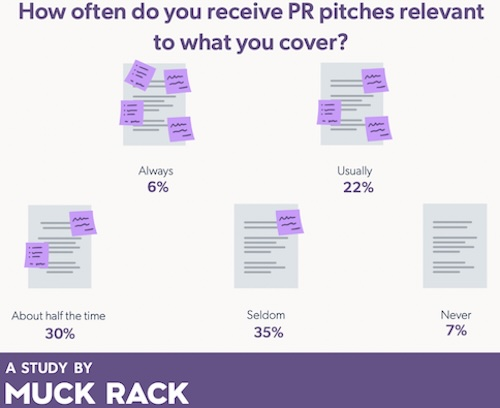
When journalists rarely receive relevant pitches, a bio that clearly shows your expertise and matches their coverage stands out. The easier you make it for them to see why you are the right source, the better your chances of getting quoted.
The Timing Detail I Almost Missed
One more pattern showed up when I sorted the results by send time. My morning pitches outperformed my evening ones across all three personas. That lines up with Muck Rack's data too, since 44% of journalists say they prefer receiving pitches before noon. It wasn't the point of the test, but it was free confirmation. The persona decides if you get picked. The clock decides if you get read at all.
So now I front-load. Queries get checked early, responses go out the same morning, and the pitch is built for a skimmer.
What I Changed After the Test
First, I rewrote my bio to be narrow. I stopped trying to sound impressive and started trying to sound exact. Years, numbers, and the specific type of work. That's it. If your credential could describe a thousand other people, it isn't a credential yet. Mine went from two proud sentences to one plain line, and the plain line wins more.
Second, I stopped chasing queries outside my lane. The specific persona only works when the query matches the specialty. Answering everything with a narrow bio just makes the mismatch obvious. Fewer pitches, better fit, more wins.
Third, I made the credential do work inside the pitch, not just under it. Now my first line often carries it. “After running ads for 40+ home service companies, the mistake I see most is...” The journalist gets the answer and the reason to trust it in one breath.
And if you're building this from scratch, with no track record to point at yet, start smaller than you think. Even “I've spent two years doing X for Y type of client” beats a vague title.
Wrapping Up
Same pitch. Three senders. Seven times the results between the worst and the best. The words mattered, but who said them mattered more, and “who” didn't mean seniority. It meant specificity. A narrow, concrete, provable credential beat a big title and destroyed a vague one.
You don't need my test to use this. Look at your own last ten pitches and read the bio like a journalist would. Does it answer why your readers should listen to this person, in one line, with something specific in it? If not, that's the highest-return edit you can make today, and it costs nothing but honesty about what you actually do.
FAQs
1. Is it okay to use different personas on HARO?
Using fake identities is not okay, and platforms ban accounts for it. My test used real credentials framed three different ways, which is completely fine. The lesson isn't to invent a persona. It's to present your real experience in the most specific, concrete form it honestly supports.
2. What makes a bio specific enough to win pitches?
Numbers, years, and a narrow type of work. “SEO consultant” is vague. “SEO consultant who has audited 200+ e-commerce sites since 2019” is specific. If a journalist could paste your bio into their article as a source description, you've written it right.
3. Do big titles like CEO or Founder hurt HARO pitches?
They help on business and leadership queries and often underperform on practical, how-to ones. Journalists writing tactical pieces want people who do the work daily. If you hold a big title, pair it with a hands-on detail, like a founder who still personally manages client campaigns.
4. How many pitches should I send before judging my results?
At least fifteen to twenty relevant pitches. HARO results are streaky, and any five pitches can go great or terrible by luck. Patterns show up across dozens. Track query, persona details, send time, and outcome in a simple sheet, and review it monthly.
5. Does pitch timing really matter that much?
Yes. Journalists read responses as they arrive and often pick sources before deadlines, and 44% say they prefer pitches before noon. A same-morning response with a decent answer regularly beats a perfect answer sent at night. Build your routine around early checks.


![How to Pitch an Opportunity on Qwoted: A Comprehensive Guide [Link Building]](https://cdn.prod.website-files.com/66212eff7fb83b815e147071/6634c9e45af10f24b00fbbda_65eeae61ca00890dd4224727_Qwoted-White.png)