


.png)
Link building has become harder to trust. A lot of websites now sell placements, guest posts are often used only for backlinks, and link insertions usually come with a price attached. So even when a link looks good on the outside, the process behind it may not feel truly earned.
HARO works differently. You answer a journalist’s question, share something useful, and only get featured if your response helps their story. There is no fixed guarantee, and that’s exactly what makes it feel more natural.
So is HARO the last authentic white-hat backlink strategy, or are there still other honest ways to earn links? Let’s find out.
What Makes a Backlink Truly White Hat?
People often use the term "white-hat backlink," but not everyone means the same thing when they say it. For some, any backlink that doesn't break Google's rules is considered white hat. For others, a link is only truly white hat when it is earned naturally.
At its core, a white-hat backlink is a link someone gives you because they believe your content, expertise, or business deserves to be referenced. You don't pay for it. You don't trade another link for it. And you don't convince someone to add it through a private arrangement.
Think about how journalists cite experts in news articles. Or how a blogger links to a useful resource because it genuinely helps their readers. Those links happen because the person publishing the content sees value in including them.
That's what makes a backlink feel authentic. The decision comes from the publisher, not from a deal happening behind the scenes.
The challenge today is that many link-building tactics sit somewhere in the middle. A link may appear on a real website, but if money, exchanges, or negotiated placements are involved, it becomes harder to call it completely earned.
Why So Many Link Building Tactics Have Lost Trust
The biggest reason many link-building tactics have lost trust is that too many people stopped focusing on earning links and started focusing only on getting them.
Years ago, tactics like guest posting, outreach, and resource page link building were often used to share useful information and build relationships. Today, many of these methods have become heavily commercialized. It's common to find websites selling guest post placements, charging for link insertions, or accepting content from almost anyone willing to pay.
As a result, people have become more skeptical. When a backlink can be bought with a credit card, it doesn't carry the same meaning as a link that was given because someone genuinely valued the information.
Even Google has taken a clear position on this issue. The company considers buying or selling links that pass ranking value to be a violation of its spam policies.
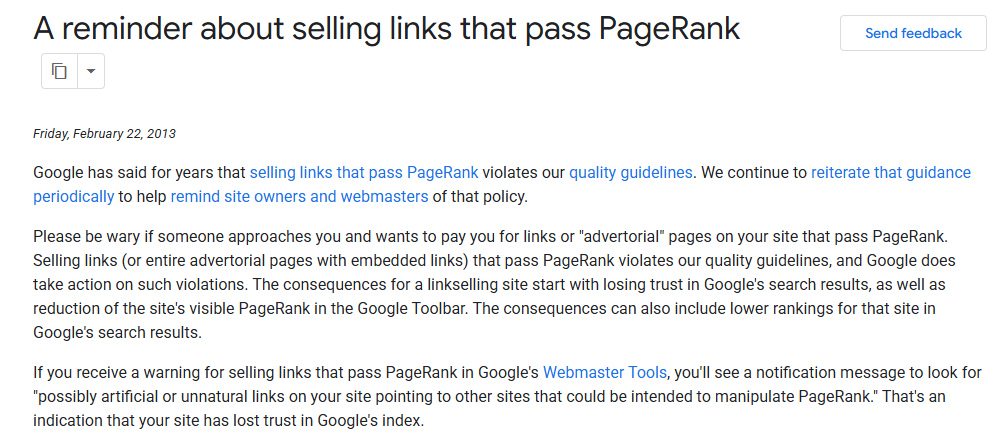
This shows how far some link-building practices have moved away from the idea of earning editorial trust.
You can see this in guest posting. There is nothing wrong with guest posting itself. The problem starts when articles are written purely to place a backlink rather than help readers. The same thing happens with link insertions. Many website owners now receive daily emails asking them to add links to old articles in exchange for money.
That's why many marketers place more value on editorial links today. When a journalist, editor, or publisher chooses to mention you without being paid to do so, the link feels more genuine. It reflects trust, not a transaction.
This doesn't mean every traditional link-building tactic is bad. Many still work when done properly. But the more a tactic depends on payments, negotiations, or behind-the-scenes deals, the harder it becomes to view it as a truly earned backlink.
How HARO Links Are Earned
HARO links are different because you cannot force them. You do not pay a website owner, ask for a link swap, or buy a space inside an article. You answer a journalist’s question and hope your answer is useful enough to include.
That is what makes the process more honest.
A journalist posts a request because they need real input for a story. They may want a short quote, a lesson from your work, or a simple explanation from someone who knows the topic well. Many people reply to the same request, so your answer has to be clear and useful.
If the journalist likes your response, they may add your quote to the article and link back to your website. If your answer is weak, too general, or hard to use, they will move on.
That’s why HARO is not just “link building.” It is more like earning a mention by helping someone write a better article. The link comes because your answer was worth using.
Is HARO Really the Last Authentic White-Hat Backlink Strategy?
Yes, in many ways, HARO is one of the last real white-hat backlink strategies left. And the reason is… you cannot buy your way into a good HARO placement. You cannot force the journalist to use your quote. You cannot choose your anchor text, control the article, or demand where your link should appear. The final decision is completely in the hands of the writer or editor.
That is what makes it authentic.
Most link-building tactics today have some kind of deal behind them. Guest posts often need payment. Link insertions usually come with a price. Many “editorial placements” are only editorial until someone sends an invoice. The link may look clean on the page, but the process behind it is not always clean.
HARO works differently. A journalist asks a question. You answer it. If your answer is useful, clear, and based on real experience, they may quote you. If it is weak or generic, they ignore it. There is no shortcut.
That’s also why HARO is hard. You can send ten pitches and get nothing. But when you do get featured, the link feels earned because your expertise did the work.
So yes, HARO is probably the closest thing left to true white-hat link building. It rewards people who actually have something useful to say, not people who only know how to negotiate backlinks.
Wrap Up
HARO still has something that many link-building methods have lost — the link has to be earned. You send your answer, but the journalist decides if it is useful enough to include. You cannot buy that decision, and you cannot force it.
That’s why HARO still feels like real white-hat link building. It is based on helping. If your answer is clear, useful, and based on real experience, you have a chance to get featured. And in today’s link-building world, that kind of link is becoming rare.
FAQs
1. What makes HARO different from other link-building strategies?
HARO focuses on earning links through expert contributions. Instead of paying for a placement or requesting a backlink, you answer a journalist's question. If your insight helps the story, the journalist may choose to feature and link to you.
2. Are HARO backlinks considered white hat?
Many SEO professionals consider HARO backlinks white hat because they are editorially earned. The journalist decides whether to use your quote, and there is no direct payment or link exchange involved in the placement process.
3. Do HARO links help with SEO?
Yes, they can. HARO links often come from trusted publications and industry websites. Beyond SEO value, they can also help increase brand visibility, build authority, and create trust with readers who discover your business.
4. Is HARO better than guest posting?
They serve different purposes, but HARO is often viewed as more authentic because the link is earned through expertise. With guest posting, the publisher and contributor usually agree on the content before it is published.
5. Why are HARO links difficult to get?
HARO is competitive because many experts respond to the same query. Journalists usually choose the clearest and most useful answers. Strong insights, real experience, and direct responses often have the best chance of being featured.



.png)

