
Your support team has explained the same problem again this week. A customer misunderstood a feature, followed the wrong sequence, or expected a result the product was never designed to deliver. The answer solved the immediate issue, then disappeared into a closed conversation.
Those explanations contain potential HARO pitch ideas because they reveal where people need clearer guidance. Your team’s practical experience gives the advice a foundation.
The challenge is finding the wider lesson while keeping the customer’s information private. A useful process starts with the questions already arriving, then checks which lessons belong in a journalist’s story and which should stay in your help center.
Find Questions That Reveal a Wider Problem
Ask support colleagues which explanations customers need repeatedly and which misunderstandings cause the most difficulty. Focus on the problem behind the question. “Where is this setting?” concerns an interface; “Why did access disappear after the handover?” could reveal a broader lesson about account ownership.
Collect examples from material your team is authorized to review. A shared note describing the issue, its context, and the staff member who handled it is enough to begin. Keep sensitive source records within the appropriate internal systems.
Look for questions that connect to decisions other businesses face. A scheduling platform might uncover confusion about coordinating availability across teams. A delivery service might notice uncertainty about communicating failed deliveries. Each offers a possible subject to investigate before anyone writes a media response.
Separate the Lesson From the Product Explanation
A journalist usually needs an explanation that helps readers understand an issue. Your product’s button names and pricing tiers rarely supply that explanation. Describe the decision or assumption that created the difficulty, then explain the practical principle behind solving it.
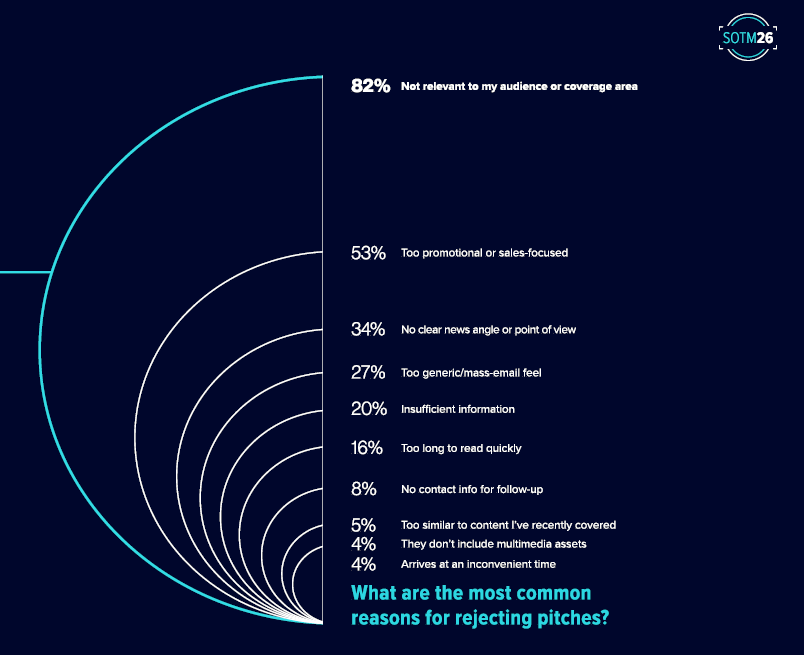
Cision reports that 53% of journalists would reject an overly promotional or sales-focused pitch.
Keep the lesson useful to readers who will never become your customers.
For example, an account-access problem could support advice about documenting ownership before an employee leaves. That lesson remains useful across different software products. Your response structure should make the explanation easy to understand, with your company identified as context for your experience. Let readers apply the lesson with their existing tools.
Verify What Actually Happened
Return to the person who handled the issue and confirm the sequence. Establish what the customer reported, what your team checked, and what resolved the problem. Distinguish a documented cause from an early assumption that turned out to be wrong.
Repeated tickets require care too. A single customer opening several conversations does not demonstrate a widespread problem. Check whether apparently similar cases actually involve the same issue, and whether the pattern reflects a particular feature, client group, or temporary incident.
Good HARO pitch ideas survive that scrutiny. Some become narrower after verification, which often improves their usefulness. You might discover that the lesson concerns account handovers during agency transitions instead of account management in general. A precise explanation is easier to defend when the reporter asks for detail.
Keep Customer Information Out of Unapproved Commentary
Use the practical lesson without copying private messages into a pitch. Removing a name is not always enough to make a case unidentifiable. A distinctive project, location, or unusual event could still point to a particular customer.
Get permission before sharing a recognizable story, direct quotation, screenshot, or nonpublic result. Agree on the detail being shared and keep that permission with the supporting record. If permission is unavailable, explain the general process through your own expertise without disguising a private incident as a public case study.
Also confirm who should speak. The support lead who investigated the issue has a different claim to firsthand experience from a founder who heard about it afterward. Attribute the explanation accurately and preserve that distinction throughout review, especially when a writer helps prepare the final response.
Match the Lesson to an Actual Reporter Request
Treat your collection of HARO pitch ideas as preparation for suitable requests. When a query arrives, compare its specific question with your verified material. A story about retaining customers needs a different explanation from a story about preventing account-access problems.
Choose the relevant lesson and write a fresh answer around the journalist’s request. Include what the reader should notice, why it happens, and what they can examine first. Leave out details that only make sense inside your company’s internal terminology.
Check the audience fit as well. A publication for IT administrators will need different context from a small-business newsletter. Adjust the explanation to the reader’s knowledge without stretching the evidence or turning the same example into an answer for every loosely related subject.
Keep a Reviewed Collection of Useful Lessons
Record the question, verified explanation, appropriate expert, evidence location, and sharing restrictions for each entry. Add a review date. You are building a reference for future responses, so someone should be able to understand what is usable without reading an entire ticket history.
Update the collection when the product or process changes. An old workaround could become misleading after a feature update. Retire material that no longer reflects the current experience, while retaining historical context when the old case remains relevant to a specific story.
Review HARO pitch ideas with support staff periodically and invite corrections. This also reveals useful content for your own website. A lesson that rarely matches media requests could still improve a help article, onboarding guide, or sales explanation. The research should remain useful even when no placement follows.
Final Take
Useful HARO pitch ideas often begin with explanations your team considers routine. Give those explanations a little attention, verify their foundations, and identify the lesson another reader could use. You will have stronger material than a list of opinions assembled under deadline pressure.
Keep the customer’s interests and the expert’s actual experience clear throughout. That makes it easier to support the follow-up questions that a useful contribution invites. Ready to turn your team’s knowledge into relevant media opportunities? Reach out to HAROlinkbuilding.com for help developing expert responses and pursuing earned coverage and editorial backlinks around the subjects your business understands best.
Frequently Asked Questions
1. Do You Need a Large Support Team?
No. A founder or customer-success specialist who handles real questions already has a starting point. Begin with a small collection of verified lessons and develop it as suitable experiences and reporter requests arise.
2. Can You Use a Customer’s Exact Words?
Get permission before sharing a private customer quotation. Otherwise, explain the general lesson in your own words without exposing identifying details. A pitch does not require a copied conversation to communicate useful experience.
3. Should Every Recurring Question Become a Pitch?
No. Some questions are specific to your interface or internal process. Reserve media responses for lessons relevant to the reporter’s audience, and use the other material to improve customer education on your own website.
4. Can Support Tickets Prove an Industry Trend?
Your ticket records describe the support interactions captured by your business. They do not automatically represent the whole industry. Explain their scope and avoid broad claims unless additional, appropriate evidence supports the conclusion.
5. Who Should Approve the Final Response?
The named expert should confirm the explanation and attribution. Someone familiar with customer permissions should also review any case details. Keep approval focused on accuracy and authorized use so the response remains manageable under deadline.