


.png)
The standard personal branding advice assumes you'll spend two years posting daily, building an audience one follower at a time, hoping the algorithm notices. It works for some people. It exhausts most, and plenty of genuinely brilliant experts give up somewhere around month four, still invisible.
There's a quieter route that skips the audience-building grind entirely — instead of creating your own stage, borrow the stages that already exist. HARO platform puts you in front of journalists at major publications every single day, and a personal brand built from being quoted in real media carries a kind of weight that a posting streak never quite matches. What follows is the full system, from zero name recognition to being the expert reporters call first.
#1. Pick a Lane Narrow Enough to Own
The single biggest personal branding mistake on HARO is answering everything. A marketing consultant who responds to queries about marketing, leadership, remote work, personal finance, and productivity ends up quoted about all five and known for none, because scattered mentions build no association.
Choose one, at most two, topics where you have genuine, defensible expertise, ideally the intersection where you're unusual: not “marketing” but “marketing for medical practices,” not “finance” but “finance for first-generation business owners.” The narrower the lane, the fewer competitors respond to those queries, the more your quotes cluster around one theme, and the faster both journalists and search results start connecting your name to it.
You can widen a lane later. You can't focus on a scattered reputation retroactively.
#2. Build the Kit That Makes You Quotable in Minutes
Winning queries is largely a speed game, and speed comes from preparation. Before pitching anything, build a response kit — a two-line bio stating your name, role, and the one credential that matters for your lane; a professional headshot ready to send on request; and, most valuably, a proof library, ten to fifteen of your best specific numbers, real examples, and earned opinions, written down and ready to deploy.
The proof library is what separates your pitches from the flood. “Cash flow matters for small businesses” wins nothing; “of the 60 businesses I've advised, the ones that failed all shared one habit, and it wasn't overspending” wins features. Collect those specifics once and reuse them across dozens of queries.
#3. Run the Cadence That Compounds
Consistency is the entire engine, and it's less work than it sounds. Set a fixed daily routine… scan queries at set times, filter hard for your lane, and answer only the ones where you have something specific to say, which for a well-chosen lane usually means three to seven quality pitches a week. Speed matters because journalists pick sources as responses arrive, and relevance matters because off-topic pitching burns the reputation you're trying to build.
Expect a realistic win rate in the early months, then watch it climb as your credits accumulate, because “as featured in” credentials in your bio make every subsequent pitch more credible.
And cold outreach could never do this for an unknown expert, and the numbers show why. Backlinko and Pitchbox's analysis of 12 million outreach emails found an 8.5% average reply rate for cold pitching.
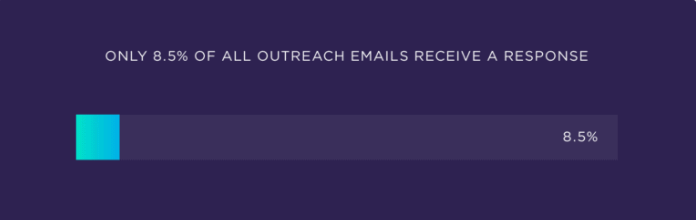
On HARO the journalist is already asking, which means an unknown name with a great answer beats a famous name with a generic one, and that's the entire opening a new personal brand needs.
#4. Turn Each Placement Into Ten Assets
A quote that publishes and sits unmentioned is a fraction of its own value. The personal branders who grow fastest treat every placement as raw material: share it on LinkedIn with a short story about the topic (not a humble-brag, an actual insight), add the logo to the “As Featured In” strip on your site, cite it in your email signature and speaker one-sheet, and fold your best published quotes back into your proof library.
That’s where the flywheel becomes visible. Media credits improve your LinkedIn engagement, your LinkedIn presence makes journalists who Google you more comfortable quoting you, more quotes create more credits, and eventually the searches for your name return a wall of third-party validation you never paid for. Each stage feeds the next, and none of it required building an audience first. The audience assembles itself around the evidence.
#5. Graduate From Respondent to Rolodex
The endgame of a HARO-built personal brand isn't winning more queries. It's not needing them. Journalists keep private lists of sources who were fast, useful, and easy to work with, and getting onto those lists is the moment your brand starts growing while you sleep.
The behaviors that get you there are small — respond to follow-up questions within the hour, never pad your expertise past its honest edge, thank them once when the piece publishes, and stay findable, same name, same title, same lane, everywhere. Do that across a dozen placements and the direct emails begin: “Writing about X again, can I get your take?” No query, no competition, just you. That's also the honest test of whether the brand is real: a personal brand exists when the calls come inbound.
One caution as the wins stack up — the platforms now verify sources more aggressively than ever, and inflated credentials or borrowed expertise get people banned and, worse, remembered. The lane you can genuinely defend is the only one worth building on.
Wrapping Up
Build a personal brand using only HARO and the sequence is refreshingly mechanical — pick a lane narrow enough to own, prepare a kit that makes you fast, pitch your lane consistently, squeeze every placement for its full value, and behave your way onto journalists' private lists. No audience required at the start, no ad budget ever, and no two-year posting streak.
What you're really building, quote by quote, is a public record of other people vouching for your expertise, and that record outperforms self-promotion everywhere it matters… with clients who search you, with employers who vet you, with journalists who need you, and with the AI systems that increasingly decide which experts get mentioned at all.
FAQs
1. How long does it take to build a personal brand with HARO?
Expect your first placements within four to eight weeks of consistent, well-targeted pitching, and a visible cluster of credits within three to six months. The brand effect, being recognized, quoted repeatedly, and contacted directly, typically compounds over six to twelve months in a well-chosen lane.
2. Do I need an existing audience or website to start?
No audience needed, and that's the entire appeal. You do want a basic professional home, a simple site or a complete LinkedIn profile, because journalists check who they're quoting. One page with your bio, credentials, and eventually your media credits is enough to begin.
3. Can employees build a personal brand this way, or only founders?
Anyone with genuine expertise can, and employees often win more because their lanes are specific. A payroll manager, a warehouse operations lead, or a customer support director has exactly the practical, first-hand insight journalists struggle to find, and companies increasingly encourage it since the coverage benefits both.
4. What if my niche rarely appears in HARO queries?
Widen one level, not five. If your exact niche is rare, answer the adjacent broader queries through your niche's angle, a restaurant accountant answering small-business finance queries with restaurant examples still builds the right association. Monitoring multiple platforms also multiplies the relevant query flow several times over.
5. Is it okay to mention my company in personal brand pitches?
Your company belongs in your bio line, nowhere else. The pitch itself should be pure expertise, since promotional responses get deleted and damage your name with that journalist. The brand benefit flows naturally… when you get quoted, your title and company ride along with every mention.


.png)

