
HARO has become one of the most popular ways for businesses and experts to get featured in online articles. Every day, journalists send out requests looking for quotes, insights, and opinions from people who understand a topic. In return, those mentions can lead to strong backlinks, brand visibility, and even traffic from large media websites.
But the truth is, most HARO responses never get used. Journalists receive many replies for each request, and they usually pick the ones that are clear, useful, and easy to include in their story.
If you want better results, the way you write your response matters a lot. In this guide, we’ll explain how to write HARO responses that get media mentions and traffic.
Speed and Timing: The First-Mover Advantage
In HARO, speed is everything. Journalists often work under tight deadlines and tend to select the first few high-quality responses they receive. Being among the first to reply not only increases the chance of your pitch being noticed but also demonstrates professionalism and reliability.
To stay on top, check HARO emails multiple times a day — early morning, afternoon, and evening—to catch relevant queries as soon as they arrive.
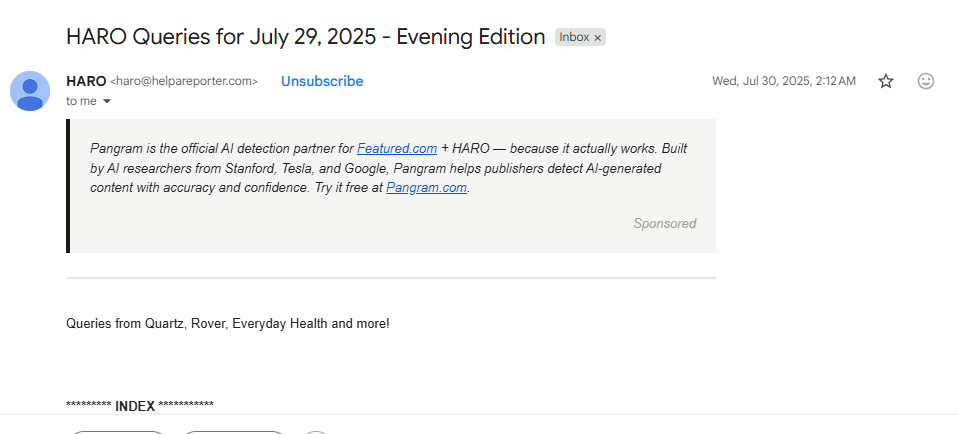
Setting up email filters or alerts for HARO messages ensures nothing slips through the cracks.
Quick responses, combined with well-crafted content, give you the first-mover advantage that often turns into media mentions, backlinks, and valuable exposure.
Strategic Selection and Relevance
Not every HARO query is worth responding to. Choosing the right opportunities is key to securing media mentions and driving traffic. Focus on queries where your expertise truly adds value. Answering questions outside your knowledge can lead to irrelevant pitches that get ignored or even hurt your credibility.
Another important factor is the authority of the publication. Prioritize responses to journalists from high-DR (Domain Rating) sites, as backlinks from these sources have a stronger impact on SEO.
Avoid sending generic replies to multiple queries; instead, tailor each response to the journalist’s specific question. Highly relevant, well-targeted pitches stand out, making it easier for reporters to use your input.
Crafting the Perfect HARO Pitch
A strong HARO pitch is clear, concise, and easy for a journalist to use right away. Start with a catchy subject line that highlights your expertise and the topic of the query. The first sentences should immediately provide a direct answer or insight, avoiding long introductions or unrelated details.
Keep the pitch short — around 150–250 words — and focus on delivering a “ready-to-publish” quote or actionable advice. Adding unique data, personal stories, or specific examples makes your pitch memorable and trustworthy.
Plus, include a brief bio with your credentials and a link to your website or LinkedIn, giving the journalist a simple way to verify your expertise.
Structuring Your Response for Maximum Impact
To make a HARO response stand out, structure it so the journalist can quickly see the value. Begin with a direct answer—a 1-2 sentence hook that addresses the query immediately. Follow this with 1-2 short paragraphs that provide supporting details, such as unique data, personal experience, or examples that give your answer depth.
Best Practices to Avoid Rejection
When sending HARO responses, small mistakes can cost a media opportunity. Avoid being salesy—focus on sharing insights, not promoting products or services.
Always follow the journalist’s instructions carefully, whether it’s providing a specific number of tips, a headshot, or a word limit. Never attach files, as these can be blocked or ignored; use links instead. Finally, proofread every response.
Typos or unclear writing make your pitch look unprofessional and reduce your chances of being featured. Clear, concise, and relevant responses are far more likely to get published.
Conclusion
Writing HARO responses that get media mentions is mostly about being clear, helpful, and direct. Journalists don’t have time to read long or complicated replies, so simple answers usually work better. When your response explains the idea clearly and adds a useful insight, it becomes easier for a journalist to include it in their article.
Over time, consistent responses can lead to media mentions, backlinks, and even steady traffic from trusted websites. The key is to focus on helping the journalist first. When your answer makes their job easier, your chances of getting featured naturally become much higher.
FAQs
1. What is the ideal length for a HARO response?
A HARO response should be concise and focused, usually between 150 and 250 words. This keeps it “copy-paste-ready” for journalists and increases the chances of being featured.
2. How quickly should I respond to a HARO query?
It’s best to answer within the first 2-3 hours. Journalists often pick the first few high-quality responses. Check HARO emails multiple times a day and respond as soon as possible to gain the first-mover advantage.
3. Can I promote my product or service in a HARO pitch?
No. HARO pitches should provide value, insights, or unique data. Overly promotional content is usually ignored or discarded. Focus on being a credible, helpful source.
4. How do I make my HARO response stand out?
Use a catchy subject line, provide a direct answer, include unique data or personal insights, and format the response for easy reading. A clear, ready-to-use quote increases your chances of selection.
5. What should I do after my pitch is used by a journalist?
Send a thank-you note, connect on LinkedIn if appropriate, and share the published article on your channels. Tracking these mentions helps build long-term media relationships and future opportunities.