
You answer the journalist’s question accurately, include your credentials, and stay within the deadline. Yet the published story uses someone else’s explanation of the same point. Their contribution may contain a detail yours left out: a concrete example, a clear consequence, or a sentence the reporter could quote without rewriting the surrounding argument.
Improving response clarity starts with identifying that missing detail. You do not need to make every reply longer or add a dramatic anecdote. You need enough specificity to show what your advice means in practice, with a main point that survives being lifted into the story.
Be Specific Enough to Explain the Action and Its Consequence
A strong HARO answer identifies what the reader should understand, supplies the detail that makes it concrete, and explains why it matters. Stop adding information when it no longer helps the journalist answer the question. Specificity concerns relevance and precision, not the largest possible volume of detail.
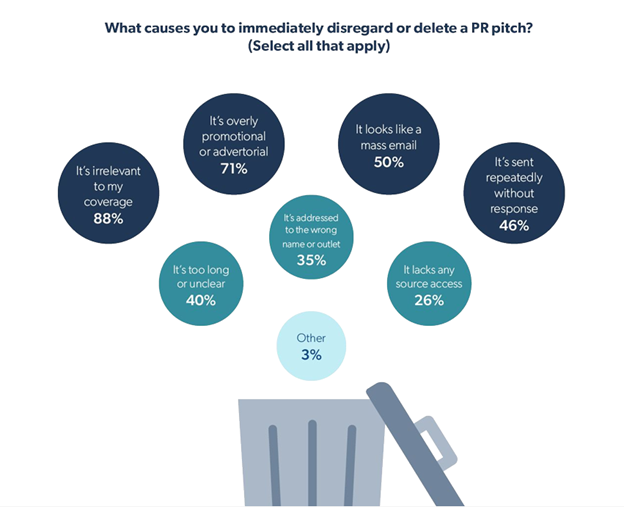
A useful answer can be broadly correct. A quotable answer also works as a clear, attributable explanation within the article. It should not require the reporter to recover an important caveat from a distant paragraph or guess what a vague pronoun refers to. That matters because 40% of journalists said they immediately disregard or delete a PR pitch when it is too long or unclear.
The request still controls the format. If the journalist asks for a brief definition, a long personal history creates extra editing work. If they request a detailed case example, a polished slogan leaves the central requirement unanswered.
Replace Broad Advice With a Recognisable Situation
Compare these illustrative approaches to a question about delayed customer onboarding. A general response says businesses should communicate clearly and set expectations. That is understandable, but it leaves the reader without a practical way to recognise or fix the problem.
A more specific response explains that the welcome email asked customers to upload documents without naming the person responsible for reviewing them. Customers waited for an update while the team assumed they were still preparing the files. Naming the owner and the next action addresses the actual source of confusion.
The second account gives the journalist a mechanism to explain. Your supporting quote becomes useful because it connects an identifiable decision with an observable consequence. Use an example from your own verified work when making that claim in a real pitch.
Choose Details That Change the Reader’s Understanding
Keep details that explain why the situation occurred or why the recommendation applies. The type of customer, the stage of a process, or the constraint on a decision may be essential. The meeting room, the weather, and unrelated company history usually are not.
Ask what the explanation loses if you remove a detail. If the causal relationship becomes unclear, retain it. If the answer remains equally understandable, the detail probably belongs in background material offered for follow-up.
A HARO answer should also identify the limit that changes how readers apply it. Advice for a self-service software product may not suit a service requiring manual approval. Put that distinction beside the recommendation instead of hiding it after a long narrative.
Use Numbers Only When They Carry Reliable Meaning
A number helps when it measures something relevant and the source can explain how it was obtained. Define the unit, the period, and the population involved. Avoid percentages without a denominator or a performance claim whose comparison period used a different process.
A precise-looking figure does not rescue an unsupported assertion. If you only know that a handoff caused repeated delays, describe the recurring situation accurately. Do not calculate a success rate from memory or invent a time saving because the journalist requested a statistic.
Keep illustrative examples separate from real evidence. You can use a clearly labelled hypothetical to explain a concept, but it must not sound like a result from your company. The journalist should know whether the number is measured, estimated, or included only to demonstrate the reasoning.
Give the Reporter a Complete Sentence They Can Use
Write the central explanation as a sentence with a clear subject and action. Avoid openings that depend on material outside the quote, such as an unexplained “that” or “this approach.” A sentence should retain its meaning when placed beside another expert’s contribution.
Keep the necessary qualification attached. If your observation concerns a particular operating condition, name that condition in the same passage. A memorable line that becomes inaccurate when separated from the rest of the email needs revision.
Your pitch organisation can place the direct answer first, the example next, and supporting background afterward. That gives the journalist a usable passage without forcing them to extract it from a long biography or promotional introduction.
Edit for Accuracy Before Editing for Memorability
A clever phrase is useful only if the source can stand behind it. Check every comparison, outcome, and implied generalisation. Ask whether the response describes a measured result, a practical observation, or an opinion, and make the distinction clear where it affects interpretation.
Send the final wording to the named expert for approval when someone else drafted it. They should understand what is being attributed to them and be available to explain it. A response becomes difficult to use when its most striking line goes beyond the source’s actual view.
Treat a HARO answer as material for a reported story, not a finished advertisement. The publication may shorten it or choose another angle, so your contribution should remain accurate and useful without a surrounding sales message.
Final Take
A good HARO answer should be specific enough to give the journalist something they can actually use. General advice may be correct, but it rarely stands out.
Instead of saying what people should do, explain what happened, why it mattered, and what the result was. Add a short example, a useful number, or a clear observation when possible.
The goal is to make every sentence useful. The more concrete and relevant your answer is, the easier it becomes for a journalist to understand, trust, and quote.
FAQs
1. Is a Longer Answer More Likely to Be Quoted?
Not automatically. Extra length helps only when it supplies information the story needs. Follow the requested format and keep the central explanation accessible without requiring the journalist to shorten unrelated background.
2. Do You Need a Statistic in Every Response?
No. A concrete process detail or accurate account of a decision can explain the point without a number. Use measurements when they are relevant, reliable, and accompanied by enough context to interpret them.
3. Can You Include a Hypothetical Example?
Yes, when the journalist accepts an illustrative explanation and does not require an actual case. Label the scenario clearly and never present illustrative numbers or events as evidence from your business.
4. Should You Write a Quote Separately From the Answer?
Usually the answer itself should contain a passage suitable for quotation. A separate suggested quote is helpful only when it adds clarity or the reporter requests it, not when it merely repeats the same point.
5. What Makes a Specific Answer Too Technical?
The problem arises when terminology prevents the intended reader from understanding the explanation. Keep necessary technical detail, define unfamiliar terms, and show the consequence in language appropriate to the publication’s audience.