.png)
Ask ChatGPT or Perplexity to recommend the best company in your category, and pay attention to what happens. Some brands get named confidently, some get a hedge, and some, maybe yours, simply don't exist in the answer. Nobody submitted a form to get in there, and no meta tag put them there either.
What did put them there is increasingly clear — the trail of PR mentions those brands built across the web, quotes, features, citations, and coverage, over years. The connection between earned media and AI search visibility isn't a theory now. There's evidence for it, a mechanism behind it, and a practical playbook for building it, and all three matter more every quarter as answers replace links as the front door of the internet.
The Front Door Moved, and the Numbers Show How Far
SparkToro's 2026 research found that 68% of US Google searches end without a single click, with AI-generated answers absorbing much of what used to become website visits.
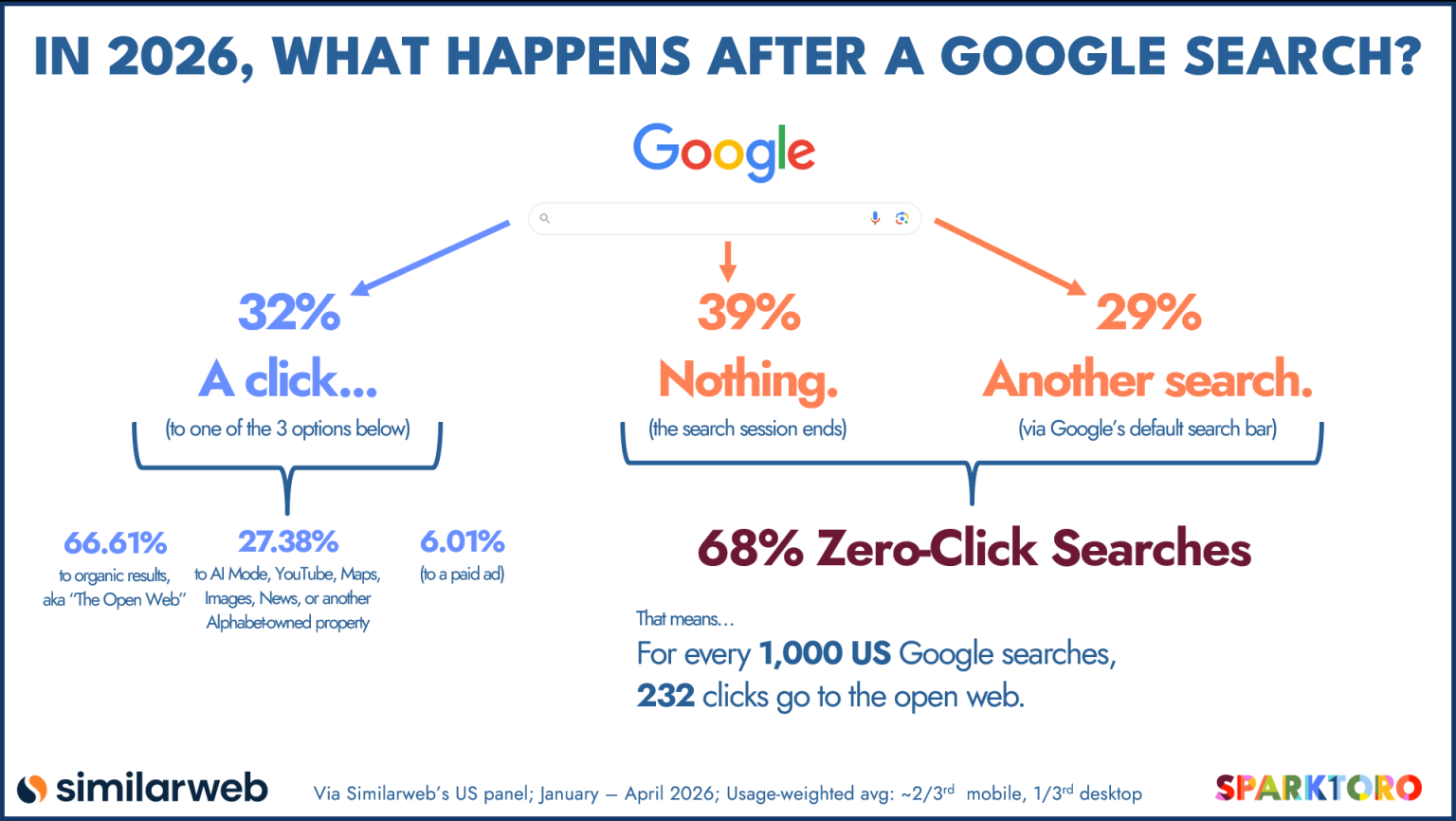
Image Source: SparkToro
Rank number one and the answer box above you still takes most of the reward. Which forces the question… if the answer is where attention lives now, what decides whose brand appears inside it?
How AI Systems Decide Which Brands to Name
Generative systems don't rank pages the way classic search does. They form associations, which names appear near which topics, in which contexts, across the trusted portion of the web. When someone asks for a recommendation, the model reaches for the brands most strongly and credibly associated with that subject, then often verifies against live sources it considers reliable.
And “reliable” has a visible shape. Pew Research analyzed 68,879 real searches and found AI summaries cite established, editorial-style sources heavily, with Wikipedia, YouTube, and Reddit alone accounting for 15% of all citations.
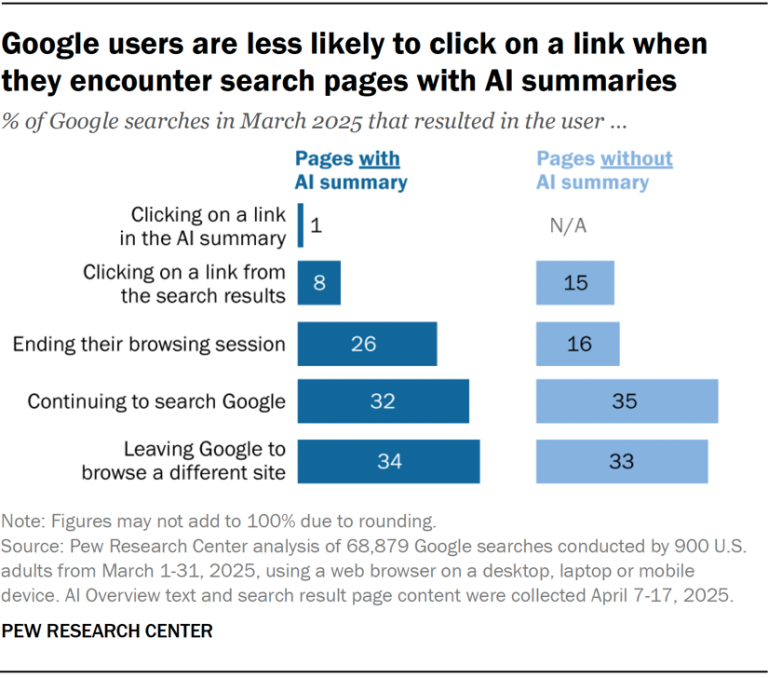
Image Source: Pew Research
The systems lean on places with editorial reputations, which means the path into their answers runs through those places, not around them.
So in short, an AI system can't recommend a brand the trusted web has never talked about. Your website describing yourself isn't association. Other credible sources describing you is, and that's precisely what PR mentions are.
Why Mentions Work Even Without the Link
This is the part that rearranges old SEO instincts. In classic link building, an unlinked mention was a near miss, nice, but the link was the currency. In AI visibility, the mention itself is currency, because models learn from patterns of text, and “[your brand], the [category] company” appearing in twenty reputable articles teaches the association whether or not any of them linked.
The linked version is still better, since it feeds classic rankings and AI signals at once, and rankings still matter as the retrieval pool AI systems draw from. But the mental shift is real: every quote, every feature, every roundup inclusion, every podcast writeup is now a deposit in the account that AI answers pay out from. Coverage stopped being a vanity metric the day machines started reading it as evidence.
There's a quality filter on that evidence, too. Graphite's research, covered by Axios, found that although AI now writes about half of new web content, 86% of what actually ranks in Google is human-written, and AI assistants show the same preference for human-made sources. Mentions on real publications with real editors count. Mentions on content-farm filler barely register, because the systems learned to discount the same junk readers do.
The Kind of PR That Builds the Footprint
Not all coverage deposits equally, and the pattern of what works maps neatly onto what earned media always rewarded.
- Expert quotes are the workhorse. Every time a journalist quotes you, the article binds your name, your title, your company, and your topic together in exactly the format models learn from, on a domain they trust. Journalist request platforms make this repeatable for brands without PR budgets, and it's the fastest route from invisible to associated.
- Consistency beats one big hit. A single viral feature creates a spike; twenty solid mentions across a year create an association. Models reward repetition across independent sources, which is why the boring-sounding strategy, steady expert commentary, month after month, in your specific lane, outperforms the moonshot press stunt for AI visibility.
- Topical focus sharpens the signal. Ten mentions about one subject build a strong association; ten mentions across ten subjects build almost none. Choose the two or three topics you genuinely want to be recommended for and concentrate your pitching there.
- Original data multiplies everything. A survey, a dataset, or a real benchmark gives journalists a reason to cite you and gives AI systems a fact attached to your name. Data-driven mentions get referenced by other writers repeatedly, which compounds the association without another pitch.
Measuring Something Your Rank Tracker Can't See
The measurement habit is simple and slightly strange: ask the machines. Once a month, run the questions your customers actually ask, best tools for X, top companies for Y, how to solve Z, through ChatGPT, Perplexity, Gemini, and Google's AI mode, and record which brands get named. Track yourself against your two closest competitors, and watch the trend instead of any single answer, since responses vary.
Pair that with the classic proxies that move when AI visibility moves: branded search volume, direct traffic, and mentions earned per month on real publications. When those climb together while your citation checks improve, the flywheel is turning, and you'll often feel it in sales conversations first, in the form of buyers who arrive already knowing who you are because “the AI mentioned you.”
Wrap Up
The connection between PR mentions and AI search is straightforward. AI tools are more likely to recommend brands that trusted websites and publications already mention. The more credible coverage your brand earns, the more signals AI has that your business is worth referencing.
The good news is that the same approach works for both journalists and AI. Share useful insights, answer questions with specific information, respond quickly, and keep showing up in your area of expertise. The brands building that reputation today are far more likely to be recommended by AI in the future.
FAQs
1. Do unlinked brand mentions really affect AI search visibility?
Yes. AI models learn brand-topic associations from text patterns across trusted sources, so a credible publication naming your brand teaches the association with or without a hyperlink. Linked mentions are still preferable because they also feed classic rankings, but unlinked coverage on real outlets is genuine currency now.
2. How long does it take for PR mentions to show up in AI answers?
Expect months, not days. Associations build through repetition across independent sources, and different systems refresh their knowledge and retrieval at different speeds. Most brands running consistent expert-quote programs see movement in citation checks within one to two quarters, with the effect compounding afterward.
3. Which matters more for AI visibility: rankings or mentions?
They work together. Strong rankings keep you in the retrieval pool AI systems verify against, while mentions build the brand association that gets you named in the first place. A brand with mentions but no rankings gets recalled vaguely; one with both gets recommended confidently and cited.
4. Can small brands realistically compete with big names in AI answers?
Yes, inside a defined lane. Models reward strength of association over company size, so a small brand consistently quoted on one specific topic can be recommended alongside far larger names for that topic. Narrow focus is the small brand's advantage, and journalist request platforms make the mentions affordable.
5. How do I check if AI tools are citing my brand?
Monthly, run your customers' real questions through ChatGPT, Perplexity, Gemini, and Google's AI results, and log which brands appear. Several SEO platforms now track AI citations automatically if you prefer tooling. Watch trends across months alongside branded search volume, since single answers vary run to run.