
For years, HARO has been a go-to tool for startups, freelancers, and marketers to get featured in top publications. But is it still worth your time in 2026?
HARO link building has changed a lot over the years. More people are using it, competition is higher, and the way journalists pick sources has shifted. That means the old tricks don’t always work anymore.
In this article, we’ll share what experts are saying and give you a clear answer on whether HARO can still help you get real coverage and results this year.
What’s Changed With HARO Since 2020
HARO has come a long way since 2020. Back then, fewer people were on HARO, and getting featured in a big publication was easier if you had a solid pitch. Fast forward to 2026, and the landscape looks very different.
First, the number of people using HARO has grown a lot. More businesses, freelancers, and marketers are sending pitches every day. That means journalists get flooded with responses, and it’s harder to stand out. The “spray and pray” approach — sending the same generic pitch to every query — doesn’t work anymore.
Personalization has become key.
Second, HARO itself has made some changes. They’ve added new subscription tiers, giving paid users faster access to queries and better filtering tools. This is great if you’re serious about PR, but it also means free users are at a disadvantage because the most popular queries get snapped up quickly.
Third, the way journalists use HARO has shifted. Many reporters are now looking for sources who are very specific, credible, and easy to quote. They don’t have time to dig through long, generic emails. That means quality matters way more than quantity. Pitches that are clear, concise, and directly answer the reporter’s question get noticed.
Plus, technology has changed the game. Tools now help people track HARO emails, draft pitches faster, and even analyze which types of queries lead to coverage. While this can save time, it also increases competition because more people are sending “optimized” pitches.
Expert POV: What PR Pros Are Saying in 2026
PR professionals today have mixed but thoughtful views on HARO’s value in 2026. A big theme from practitioners is that how you use HARO matters more than ever, largely because the platform itself has changed significantly in recent years.
Many in the industry point out that HARO’s return under Featured.com in 2026 has reshaped its role. After Cision discontinued the older Connectively version in late 2024, Featured acquired and relaunched HARO in April 2026 with a renewed focus on credibility and simpler email-based query delivery.
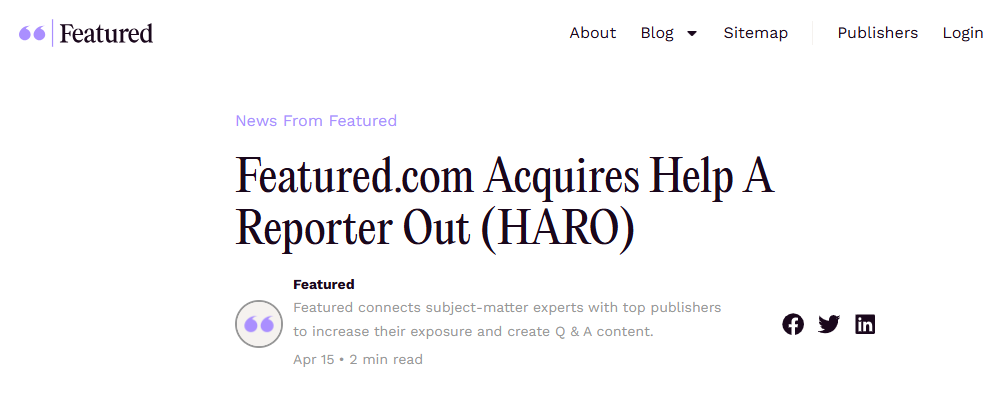
Source: Featured
Journalists and PR pros welcomed this shift because it cut back on some of the complexity and noise that had built up previously.
Still, seasoned communicators agree that journalists’ inboxes are even more crowded than before. Single HARO queries often draw 100–300 pitches, meaning journalists frequently skim or delete replies that don’t demonstrate immediate relevance and value.
Studies show that 91% of journalists prefer one-to-one email pitches, and pitches under 200 words get the highest response rates.
Many experts also emphasize that building relationships with journalists — beyond reacting to HARO emails — is a smarter long-term tactic. Reporters increasingly value sources who make their job easier with clear, quotable insights rather than boilerplate pitches.
Research shows that 78% of journalists are more likely to cover a story if it includes unique data or visuals, highlighting the need for value-driven pitches.
Plus, while HARO still gets mentions in strategy discussions, skilled PR professionals are pairing it with other outreach tools and platforms to diversify their media placements. This reflects a broader shift away from relying on a single service to achieve consistent coverage, emphasizing strategy and relevance over volume.
Can HARO Still Help You Get Real Coverage and Results in 2026?
Yes, HARO can still help you land media coverage, boost your authority, and even improve SEO. But it’s not a magic button anymore. To see real results, you need to be strategic, focused, and willing to put in the effort.
First, let’s look at what works. HARO still connects you directly to journalists actively looking for sources. If your pitch is relevant, clear, and adds value, it can lead to features on high-authority sites.
This isn’t just theory — PR pros report that carefully crafted HARO pitches still get responses anywhere from 10% to 25%, depending on the niche. That means with 20 well-targeted pitches, you could get 2–5 opportunities to be quoted in the media.
However, there are challenges. Competition is higher than ever. Hundreds of people may reply to the same query, and journalists are scanning for concise, expert responses that they can quote immediately. Generic or vague pitches get ignored.
So, your time investment matters: you can’t just send dozens of one-size-fits-all emails. Instead, focus on a few high-quality queries each week and tailor your response to the reporter’s exact needs.
Another key factor is timing. The first few hours after a HARO query is sent are the most critical. If you want to get noticed, you need to reply quickly with a clear, easy-to-use answer that a journalist can quote directly. Including stats, examples, or actionable insights increases your chance of getting picked.
Combine HARO with other media strategies. Don’t rely solely on it. Building relationships with journalists, publishing strong content, and leveraging other PR tools alongside HARO dramatically improves your results.
Conclusion
Getting featured in the media is harder now than it was a few years ago. More people are pitching, and reporters are looking for quick, clear answers they can use right away.
If you want results, focus on sending a few good, useful responses instead of a lot of generic ones. Make your answers easy to read, give examples or facts, and respond quickly. Also, combine this with other ways to reach reporters, like building connections or using simple PR tools.
When you do it right, you can still get noticed, get mentioned in articles, and show your expertise. It takes some effort, but smart, focused work pays off.
FAQs
1. Is HARO still effective for SEO in 2026?
Yes, HARO continues to be a strong method for earning high-quality backlinks from authoritative publications, which improves your website’s SEO and domain authority.
2. How can businesses increase their success rate on HARO?
Respond quickly to relevant queries, provide unique insights or data, follow journalist instructions carefully, and build genuine relationships over time.
3. Are there any HARO alternatives for link building?
Yes, platforms like Qwoted, SourceBottle, Help a B2B Writer (now, MentionMatch), Terkel, and LinkedIn outreach can complement HARO for earning backlinks and media exposure.
4. What types of content work best for HARO pitches?
Short, direct, and data-driven responses work best. Include personal experience, unique insights, and concise examples that are easy for journalists to quote.
5. How much time should I dedicate to HARO each week?
Check queries at least three times per day when newsletters are delivered. Consistency and prompt responses are crucial, as journalists often have tight deadlines.