



Not all backlinks carry the same level of risk. Two common methods — HARO-style journalist outreach and link insertions — can both produce results, but they work very differently behind the scenes. One is based on earning mentions through expert input. The other is usually based on placing links into existing articles through outreach deals.
Search engines are getting better at telling whether a link was earned naturally or arranged quietly. That difference matters for long-term rankings and site safety.
Let’s compare HARO link building and link insertions from a risk point of view.
What Is HARO Link Building?
HARO link building is the process of earning backlinks by answering journalist requests on platforms like HARO (Help a Reporter Out).
Reporters post questions when they need expert quotes for their stories, and businesses or specialists reply with insights. If the journalist uses your response, they often mention your name and link to your website in the published article.
So instead of chasing websites and asking for links, you contribute useful expert input and get credited for it. The link is earned because your answer adds value to the story — not because you paid for placement or negotiated a swap.
A typical workflow looks like this: you monitor daily queries, pick the ones that match your expertise, send a short and clear response, and include your credentials. When your quote fits the article, the writer includes it and adds your attribution link.
These links usually come from news sites, magazines, SaaS blogs, and industry publications. That’s why they are often considered higher quality than many outreach links. They sit inside real editorial content and are tied to your expertise, which helps with authority, trust, and long-term SEO strength.
What Are Link Insertions (Niche Edits)?
Link insertions, also called niche edits, are backlinks added to existing published articles on other websites. Instead of writing a new guest post, the link is placed into content that is already live and indexed. Usually, the site owner or editor updates the article and adds your link where it looks contextually relevant.
Here’s an example.
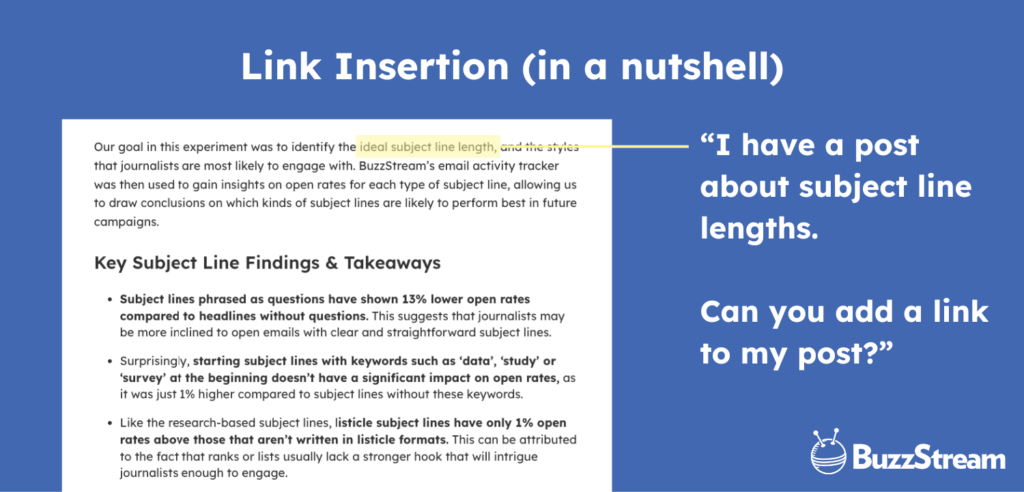
This is commonly done through outreach. Someone contacts the website and asks to include a reference link inside an older post, often in exchange for a fee. Because the page already has age, rankings, and authority, the link can pass value faster than a brand-new article.
On the surface, niche edits look natural because they sit inside real content. But the intent behind them matters. If the link is added mainly for SEO benefit and not because it truly improves the article, it becomes a gray-hat tactic.
Search engines pay attention to patterns like paid placements and unnatural edits. That’s why link insertions can work in the short term, but they carry more risk compared to links that are earned through genuine editorial contribution.
HARO vs Link Insertions – Risk Comparison
Let’s compare their risk.
How the Link Is Earned vs Placed
HARO-style links are earned through expert contribution. A journalist reviews multiple responses and chooses which sources to quote. Your link appears because your input supports the story. Link insertions are different — they are added later through outreach to site owners. Since the link is arranged rather than editorially selected, it carries more risk signals if used heavily or without strong content fit.
Payment Footprint Risk
HARO placements are typically not paid for. You provide insight, and if it’s useful, you get credited. That keeps the footprint clean. Link insertions often involve payment to add a backlink into an existing article. When many paid edits appear across unrelated sites, it creates a detectable pattern. Search engines actively look for paid link behavior, which raises the overall risk profile of this method.
Editorial Control Signals
With HARO, the publication’s editor controls what gets published, how your quote appears, and whether a link is included. That independent decision adds trust value. In link insertions, the update is usually made after outreach approval. The edit is driven by SEO goals. Post-publication commercial edits can look unnatural, especially when multiple outbound links are added later into older articles.
Anchor Text Risk
HARO links usually use natural anchors — your brand name, your personal name, or your company title. This keeps anchor text distribution healthy. Link insertions often push keyword-heavy anchors to influence rankings faster. When many backlinks repeat the same keyword anchors, it creates an over-optimization pattern. That pattern is a common flag in spam reviews and algorithm filters, increasing ranking volatility risk.
Long-Term Stability
HARO editorial links tend to stay live because they are tied to a journalist’s source reference inside the story. Removing them would break attribution. Inserted links are less stable. Site owners may later remove paid edits, change them to nofollow, or clean up outbound links during audits. So even if niche edits work short term, their long-term reliability and safety are usually lower overall.
Conclusion
When you compare HARO link building vs link insertions from a risk point of view, the difference mostly comes down to how the link is created.
HARO links are earned through expert contribution and editorial choice. Link insertions are usually arranged after publication for SEO benefit. That single difference changes how search engines interpret them.
If your goal is long-term authority, brand trust, and safer rankings, editorial links from journalist outreach are the stronger bet. They grow slower, but they age better. Link insertions can still work in some campaigns, but they need careful control and moderation.
FAQs
1. Is HARO link building safer than link insertions?
Yes. HARO links are earned editorially from journalists, which makes them white-hat and Google-safe. Link insertions can be risky if money or manipulation is involved.
2. Can link insertions harm my website’s SEO?
They can, especially if they violate Google’s paid link guidelines. Poor-quality or unnatural insertions may lead to penalties over time.
3. Do HARO links really help with long-term SEO?
Absolutely. HARO links build authority, trust, and strong E-E-A-T signals, which support long-term rankings and brand credibility.
4. Are link insertions ever okay to use?
They may be considered in limited cases when done naturally, without payment, and on highly relevant, trusted sites. But they should never be your core strategy.
5. Which strategy should I focus on as a growing brand?
For most brands, HARO link building is the better choice. It’s lower risk, harder to replicate, and helps build lasting authority rather than short-term gains.


.png)
.png)

