Someone searches a question related to your service, reads an answer, and leaves without visiting your website. Your analytics records no session, even if the person saw your expert’s name in a result or recognised your business from an article they read earlier. The visit counter cannot capture every stage of that discovery.
That gap gives relevant brand mentions a reason to appear in your reporting beyond backlink totals. Their value depends on what readers encounter and remember. You need to separate exposure, credibility, and eventual demand from the immediate click, while keeping claims about unseen influence proportionate to the evidence.
Media Mentions Can Reach People Before a Website Visit
Zero-click search describes a search that does not produce a click to an external website, although studies define and measure it differently. Results can answer a simple question, provide business information, or help someone decide what to investigate later. A missing visit does not tell you which of those outcomes occurred.
Relevant media coverage creates another place where a person can encounter your expertise. They might see the article directly, find it while researching your name, or come across an attributed passage in search. The useful outcome is a clearer association between your business and knowledge that matters to them.
That does not make every mention more valuable than traffic. Unseen or irrelevant coverage can accomplish little. Judge the likely audience and what the article communicates before treating its existence as evidence of meaningful exposure.
Separate a Citation From a Click and a Remembered Brand
Pew Research Center found that users clicked a link inside a Google AI summary in just 1% of visits to search pages where a summary appeared.
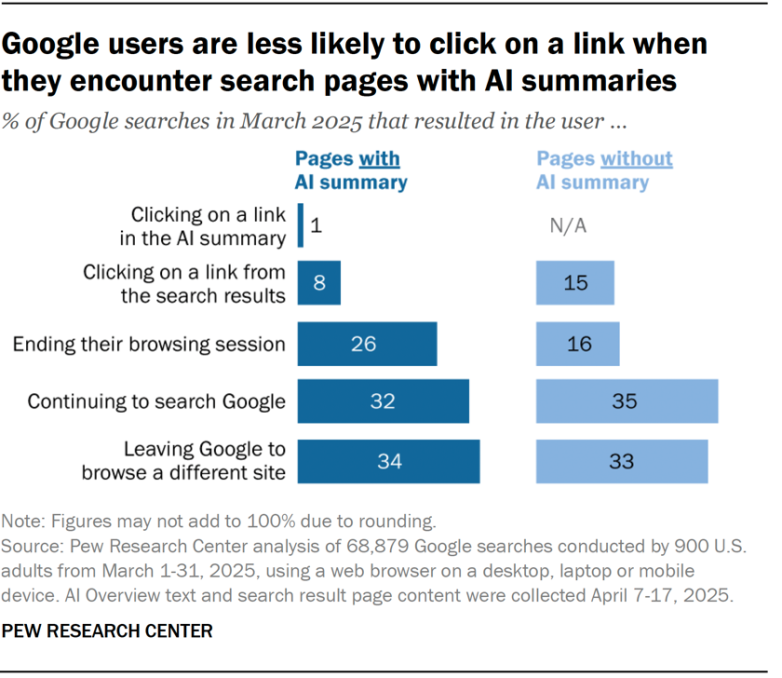
This shows that visibility in AI results does not always lead to direct traffic.
That is why these results should be tracked separately. You can record the original media mention, any search or AI appearances, and the referral traffic the coverage brings. Keeping these numbers separate gives you a clearer picture of what the media mention actually achieved.
Give the Reader Something Specific to Associate With Your Name
A media mention becomes more useful when it communicates identifiable expertise. An operations specialist explaining a practical failure gives readers a reason to connect that person with the subject. A company name dropped into an unrelated list offers less information to remember.
Keep attribution accurate and recognisable. Use a consistent business name and explain the expert’s relationship to it. If a reader later searches the name, the public information should make it clear that they have found the same person or organisation.
Prepare an answer that remains useful when quoted briefly. The main claim and its necessary qualification should stay together. You cannot control every excerpt, but you can avoid a contribution whose meaning depends on a promotional introduction or a caveat buried elsewhere in the email.
Use Coverage to Support the Research People Do Later
Prospects often need more information before choosing a provider. They may search your business name, inspect the expert’s background, or look for evidence of relevant experience. An independently reported article gives them material outside your own sales pages to examine.
Make the original coverage easy to find from a relevant biography or resource page. Describe what the publication actually used: a quotation about a particular subject, for example. Do not convert that into a claim that the publisher recommends your entire service.
Zero-click search makes this later research worth considering, but it does not prove that the mention started the journey. Use enquiry conversations and optional discovery questions to collect clues, then use those answers as supporting evidence while acknowledging the gaps in attribution.
Understand the Role of AI Without Promising Inclusion
Google’s AI feature guidance says supporting pages must meet relevant search eligibility requirements and that inclusion is not guaranteed. A published media article is potential source material, not a contract requiring an answer engine to mention your business.
Even when the article is cited, your name may not appear in the generated answer. The system might use another part of the story or show a source link without reproducing your attribution. Report the brand exposure you actually observe instead of assuming the entire article’s contents reached the user.
Keep this part of the campaign modest and practical. Useful expert quotations deserve attention for the original readers as well as any later retrieval. Creating accurate coverage remains a clearer objective than promising a particular answer across different search products.
Measure Several Outcomes Without Inflating Any of Them
Record the story, subject, attribution, link destination, and publication date. Track referral visits and useful actions where your analytics allows. Review relevant branded searches and enquiries alongside other marketing activity, since those measures do not isolate media influence on their own.
For important search questions, keep a dated record of observed results and any visible brand mention. State the query, product, and context of the check. An individual observation demonstrates an appearance at that moment, not a stable position every user will see.
Avoid assigning an invented revenue value to every unclicked impression. This behaviour creates a measurement challenge, but it does not justify filling the gap with numbers your evidence cannot support. A report is more useful when it distinguishes confirmed outcomes from plausible contributions.
Keep Earning Clicks Worth Receiving
Your website still needs a clear offer, useful resources, and working routes to an enquiry or purchase. A prospective customer who chooses to visit should find the detail that could not fit in a search result or short quotation. Media coverage cannot compensate for an unclear destination.
Prioritise resources that help people take the next step: evaluate a service, compare relevant options, or understand how your process applies to their problem. Keep the information specific to your actual business and consistent with the expertise shown in public coverage.
Assess media opportunities against that larger journey. A relevant publication can introduce your knowledge, while the website supplies the detail needed to act. Both deserve useful content and honest measurement.
Make Your Expertise Visible Before the Visit
As zero-click search grows, fewer people may visit a website directly from every search result. That makes trusted mentions across reputable publications even more important.
A strong media mention can still help people discover your brand, build trust, and strengthen your presence across search and AI-generated results. The value is no longer limited to referral traffic alone.
For that reason, track more than clicks. Look at brand mentions, branded searches, referral traffic, search visibility, and whether your coverage appears in AI or search summaries. Media mentions are becoming more valuable because they can influence visibility and credibility before a user ever reaches your website.
FAQs
1. Does Zero-Click Search Mean Website Traffic No Longer Matters?
No. Visits still help people inspect your offer and complete useful actions. The point is to measure relevant exposure separately, because an immediate click is not the only possible outcome of encountering your expertise.
2. Does an AI Citation Guarantee That Your Brand Appears?
No. An answer can cite a page without using the passage that names your business. Check the actual output before reporting a brand mention, and record the context and date of the observation.
3. Are Unlinked Mentions as Valuable as Backlinks?
They offer different possibilities and should be reported separately. A mention can contribute to recognition, while a hyperlink also gives readers a direct route to your site; neither has a universal fixed business value.
4. Can You Attribute Branded Search Growth to a Media Campaign?
Treat it as supporting evidence unless you have stronger attribution. Advertising, referrals, events, and other activity can also influence branded searches, so keep those factors visible when interpreting the trend.
5. Should You Stop Publishing Educational Content?
No. Useful resources still support customers, journalists, and relevant search journeys. Improve the depth and practical purpose of those pages instead of assuming that every informational query will behave the same way.