



The worst HARO queries aren't the obvious junk. The junk is easy to skip. The dangerous ones look great. Real outlet, interesting question, right in your field. You spend forty minutes on a strong answer, it goes nowhere, and the same thing happens next week, for reasons that had nothing to do with your writing.
Those queries waste time in ways you can predict. Not because the placement is fake, but because the odds, the effort, or the payoff is broken from the start. Once you learn to run a ten-second math check before writing, you get your hours back, and your hours are the entire cost of this channel.
First, Accept the Base Rate
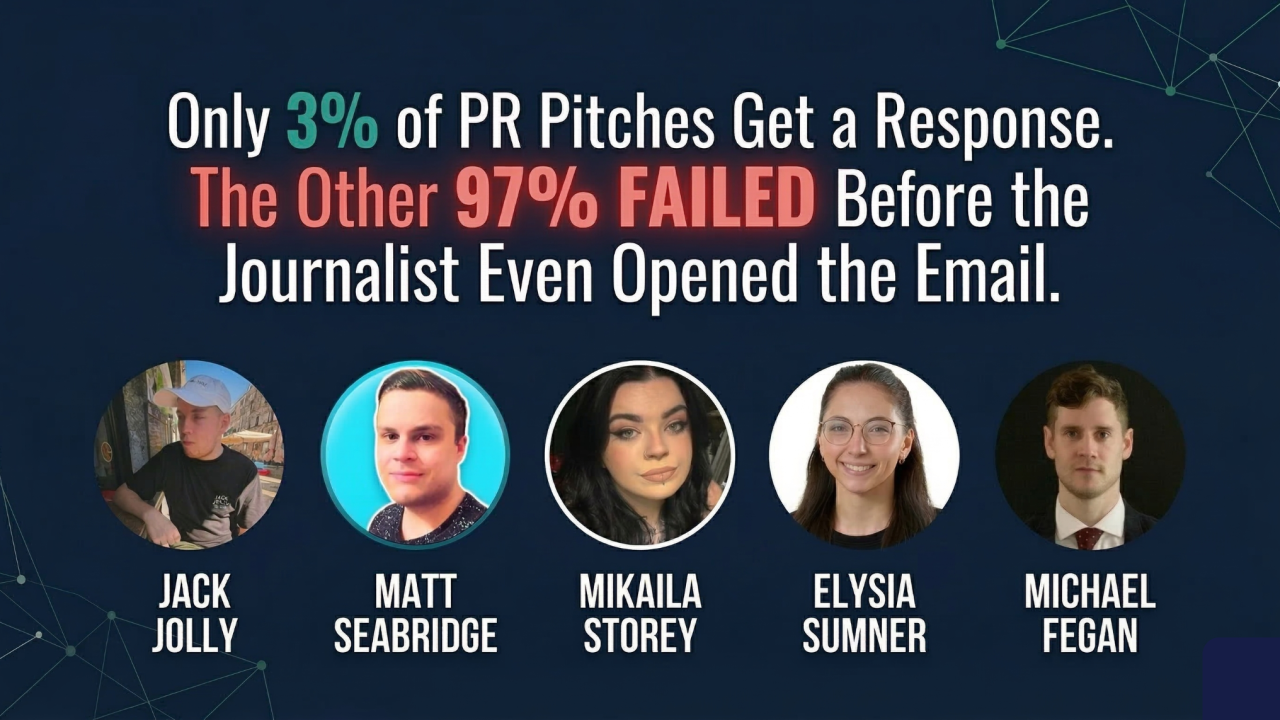
Propel's Media Barometer, built on hundreds of thousands of real pitches, found journalists respond to roughly 3% of the pitches they receive, and that includes the polite rejections.
Query platforms improve those odds a lot because the journalist is actively asking, but the lesson stays. Most pitches, even good ones, produce nothing.
That's not a reason to quit. It's a reason to be picky. When most swings miss, the game is choosing better pitches to swing at, not swinging harder at everything. The rest of this article is a list of the swings that look good and aren't.
The Query Everyone on Earth Is Answering
A query about a huge trending topic, a famous company, or a major event feels like a golden ticket. It's the opposite. Everyone recognizes it, everyone answers it, and your response lands in a pile of hundreds.
Propel's data has a brutal example. Of more than 4,300 pitches sent about the Super Bowl one quarter, only 0.58% got any response at all. Half a percent, on the biggest topic in the country. Hot topics don't multiply your odds. They divide them, because the competition grows faster than the coverage does. The queries worth your best effort are the specific, unglamorous ones in your exact lane, where you might be one of five qualified answers instead of one of five hundred warm bodies.
The Query That Wants an Essay
Some queries ask for 400 to 600 words of detailed input. Writing that takes an hour, and the return doesn't scale with the effort. Between 51 and 150 words get the highest response rates, while pitches running 501 to 1,000 words drop to around 1.8%. Long answers don't just cost more time. They actually perform worse, because the journalist wanted a quote, not a chapter.
When a query demands an essay, one of two things is true. Either the asker is harvesting free article content, or they haven't figured out their story yet. Both endings waste your hour. Keep your answers in the short, dense zone that wins.
The Almost-Expired Query
You spot a great query with the deadline closing in a few hours, or already tonight. Tempting, because the question fits you perfectly. But journalists read responses as they arrive and usually pick sources early, so a query in its final hours has often been decided for a day already. You're writing for a seat that's taken.
The fix isn't answering faster at midnight. It's restructuring when you look. Fixed checking times early in the day put you in the first wave on fresh queries, where the seat is still open.
The Query Just Outside Your Lane
This one wastes the most time across a whole year, because each individual pitch feels justified. You're a marketing consultant, and the query wants a business growth expert. Close enough, right? So you stretch, write something decent, and lose to someone for whom the question wasn't a stretch at all.
Adjacent queries have a hidden cost too. Journalists in a beat see the same names, and a name that shows up slightly off-topic repeatedly reads as a sprayer. Every stretched pitch taxes your on-lane reputation a little more. The rule that protects you is simple. If your bio doesn't make you an obvious pick for this exact question, the forty minutes belong to a query where it does.
The Placement You've Outgrown
Early on, every placement helps. A small blog link, a tiny mention, all of it builds the base. But there's a point where answering queries from minor sites costs more than it returns, because your hour could have gone to an outlet that moves your authority, your brand, or your AI visibility.
Do the honest audit twice a year. Look at your last twenty placements and ask which ones you'd still chase today. If a third of them wouldn't clear your bar now, raise the bar in your query filtering, not just in your head. Your time should chase the level you're going to, not the level you came from.
The Ten-Second Math Check
Before writing any response, run three quick questions. How many people can credibly answer this? If the honest answer is hundreds, your odds just collapsed. How long will a winning answer take? If it's an hour, the payoff needs to be real. And does this placement still move something I care about, links, brand, or relationships? Three quick answers, and the queries sort themselves.
Most people who burn out on these platforms never ran that check. They answered everything, won occasionally, and concluded the channel doesn't work. It works fine. It just pays by the decision, not by the hour, and the people it pays best are the ones who decline the most.
The Bottom Line
The queries that waste your time secretly all break the same equation. Too much competition, too much effort, too little payoff, or too far from your lane. None of them look like junk, which is exactly why they're expensive, and all of them announce themselves if you spend ten seconds doing the math before thirty minutes doing the writing.
So flip your default. Stop asking whether you could answer a query and start asking whether you should. The strongest operators on these platforms send fewer pitches than beginners do. They just aim every single one at a query that can actually pay for it, and that one habit is most of the difference.
FAQs
1. How do I know if too many people will answer a query?
Read it as a stranger. If the topic is trending, the question is general, and any professional could say something, expect a huge pile. Specific questions needing specific experience thin the field fast. The narrower the credible answer pool, the better your odds of being picked.
2. Are long, detailed responses ever worth writing?
Only when a journalist has already engaged and asks for depth. First responses win in the short, dense range, and data shows very long pitches perform worst of all. Lead with your best 150 words and offer more on request. That offer costs one line.
3. Is it worth answering a query on its deadline day?
Usually not for competitive queries, since sources are often chosen early. Exceptions exist for very fresh queries with tight deadlines or niche questions with few qualified answers. As a rule, put your effort into queries you catch early instead of ones you catch late.
4. Should I ever pitch outside my exact expertise?
Only when your real experience genuinely covers the question through a specific angle, and you can say so honestly in one line. Stretching into adjacent topics regularly lowers your win rate and slowly damages how beat journalists perceive your name. Depth beats coverage in this channel.
5. How many queries should I answer per week?
For most people, three to seven well-chosen queries beat fifteen scattered ones. The limit isn't writing speed. It's the supply of queries where you're genuinely one of the best answers available. If your lane produces fewer perfect fits, answer fewer and make each one count.


.jpg)
.png)

