


.jpeg)
Building links has always been a key part of SEO, and in 2026, it’s more important than ever. But the old tricks don’t work anymore. Google now values quality and trust over numbers. If you want your website to grow, you need strategies that actually bring results and help you stand out.
In this blog, we’ll look at the best ways of building links in 2026 that focus on authority, valuable content, and smart outreach.
Content-Focused Link Building
One of the most reliable ways to earn high-quality backlinks is by creating content that people actually want to share and reference. When your content provides value, it naturally attracts attention and links from other websites.
Create Linkable Assets
In our experience, linkable assets are one of the best long-term investments for SEO. These can be tools, calculators, ranking lists, or detailed guides that others find useful enough to cite on their own sites.
For example, an industry-specific checklist or a “top 100 tools” list often gets picked up by blogs, newsletters, and even news outlets. The key is to create something that solves a problem or saves time for your audience, because content like that always has a better chance of earning backlinks.
Data-Driven Content
Another effective approach is publishing data-driven content. Websites and journalists are always on the lookout for fresh statistics or original studies to support their writing. By creating your own reports or analyzing industry trends, you position your site as a trusted source of information.
I’ve seen how one strong research piece can attract backlinks from dozens of authoritative websites over time. Even if you don’t have your own data, curating insights from multiple reliable sources into one comprehensive report can still attract valuable backlinks.
Digital PR & Outreach
Strong outreach and smart digital PR have become some of the most effective ways to build authoritative backlinks in 2026. Instead of waiting for people to discover your content, you take a proactive approach to get your brand mentioned in the right places. Actually, data backs it up as well:
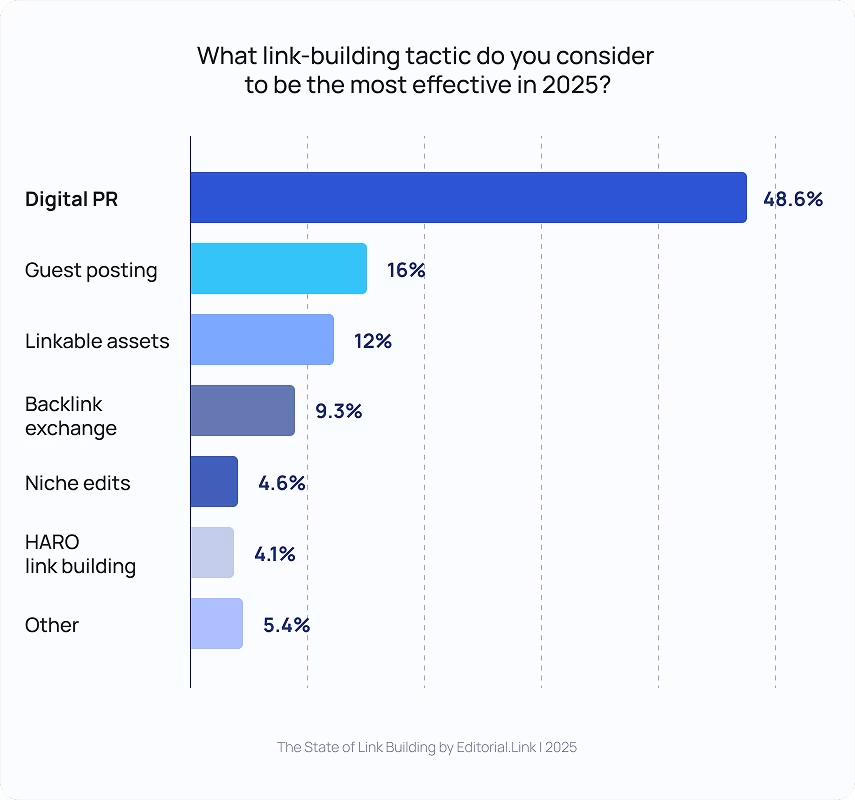
Credits: Buzz Stream
Digital PR through HARO/Featured/Qwoted
Platforms like HARO, Featured, and Qwoted give you direct access to journalists and editors who are looking for expert input.
By answering their queries with genuine insights, you can earn high-authority backlinks from respected publications. I’ve found this not only improves SEO but also puts your brand in front of new audiences, which is a double win.
Guest Blogging
Guest blogging still works when it’s done carefully. Writing for well-known sites in your industry helps you showcase expertise and secure relevant backlinks at the same time.
The focus should always be on quality, choose sites that already have strong SEO authority and an engaged readership. A thoughtful, well-researched article will often bring in more long-term value than several quick, low-quality posts.
Broken Link Building
Broken link building is another outreach tactic that consistently delivers results. By finding broken links on websites in your niche and suggesting your content as a replacement, you not only help the site owner fix an issue but also gain a backlink in return. It’s a practical approach that benefits both sides.
Targeting Unlinked Mentions
Sometimes, your brand may be mentioned online without a link. Tracking down these unlinked mentions and reaching out to request a link is a straightforward yet effective way to convert recognition into SEO value.
Building Brand Authority for Natural Links
One of the most powerful ways to attract backlinks without constant outreach is by becoming a trusted voice in your industry. When people see your brand as reliable and authoritative, they naturally start referencing your content in their own work.
This is the kind of link building that doesn’t feel forced in any way, shape, or form. That’s because your reputation speaks for itself.
A big part of building this authority is consistency. Publishing high-quality content regularly helps establish your site as a go-to resource. Over time, people come to recognize your brand as a source they can rely on.
For example, in some industries, certain websites are automatically trusted because they’ve built a reputation for being accurate and informative. That’s the position every brand should aim for. Like TechCrunch.
Relationships also play a key role here. By building genuine connections with journalists, bloggers, and other creators in your niche, you increase the chances of your content being shared and cited.
But once established, it creates a steady flow of natural links that no outreach campaign can fully replace.
Wrap Up
The best link-building strategies in 2026 focus on creating real value, building authority, and forming genuine relationships. High-quality content, thoughtful outreach, and consistent brand presence work together to earn links that actually matter.
Link building today is less about chasing numbers and more about earning trust. When people trust your brand, they are more likely to share, reference, and recommend your work. That’s what keeps your rankings strong in the long run.
If growing your online presence is the next step for your business, let’s create a strategy designed to bring real, measurable results. Reach out today and start building links that actually make a difference.
FAQs
1. What is the future of link building?
The future of link building is moving toward quality and trust. Search engines are focusing more on backlinks that come from reliable, relevant sources rather than just large numbers of links.
2. Is link building still relevant to SEO in 2026?
Yes, link building is still highly relevant in 2026. Even though Google has made changes to how links are valued, real-world results show that backlinks remain one of the strongest signals for authority and rankings.
3. What is advanced link building?
Advanced link building is a more refined approach to earning backlinks that goes beyond the basics. Instead of relying only on simple tactics like directory submissions, it focuses on high-value methods such as guest posting on authority sites, creating data-driven content, digital PR, and building genuine relationships.
4. What is ABC link building?
ABC link building, also called a three-way link exchange, is a method used to avoid direct reciprocal linking. For example, website A links to website B, website B links to website C, and website C links back to website A. This way, the exchange isn’t as obvious to search engines, though it should be used carefully to avoid looking manipulative.


.png)
.png)

