
Most people guess wrong on this, usually by writing too much. It feels like more detail proves more expertise, so a 500-word answer seems safer than a 150-word one. The data says the opposite, and the gap between the two is bigger than you'd expect.
There's a clear range where pitches perform best, a range where they fall apart, and a simple way to get a long draft into the right zone without losing the good parts. Let's go through all three.
The Numbers From Real Pitches
When reaching out to journalists, baseline metrics show a steep drop-off between visibility and engagement, with 46% of pitches getting opened but only 3.43% receiving a response. To bridge that gap, length matters significantly: pitches kept in the 51 to 150 word sweet spot achieve peak response rates of 6.5% to 8% — more than double the overall average.
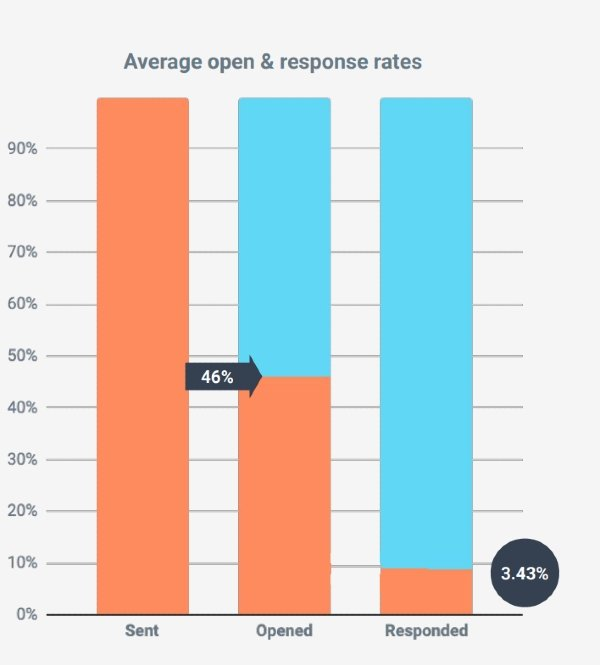
Conversely, expanding a pitch to 501 to 1,000 words cuts performance by more than half, dropping response rates down to 1.8% despite using the exact same senders, industries, and platforms. Subject lines follow the exact same pattern, where concise headers of five words or fewer win out, while bloated 16-word subject lines tend to get opened and then ignored.
Why Short Wins
The mechanics are simple once you picture the journalist's screen. They're scanning many responses looking for something they can use. A short pitch shows them the whole answer at once, so the decision takes seconds. A long one asks them to search for the usable part.
Long pitches also signal something unhelpful. If you needed 600 words to answer one question, it reads like you don't know which part matters, and journalists want sources who can identify the important thing quickly, because that's what they do all day.
There's a practical reason too. Journalists usually quote one or two sentences from you. Everything beyond the sentences they'd actually use is invisible work, and it buries the good lines deeper where they might not be found at all.
The Range That Actually Works for HARO
The Propel data covers pitches broadly, and query responses have slightly different needs, so here's the practical translation.
Your quotable answer should sit around 100 to 175 words. That's enough for a complete thought with a specific detail and an example, and short enough to be read fully. Add a two-line bio and a one-line offer of more, and your total email lands somewhere around 150 to 250 words.
That total is the target. Below 100 words of substance you usually haven't said anything specific enough to quote. Above 300 total, you're moving into the range where response rates drop off. The middle is where complete and skimmable overlap.
What Gets Lost When You Write Long
Worth understanding what actually happens to a long pitch, because it isn't simply ignored. Journalists open it, skim the first few lines, and if the useful part hasn't appeared yet, they move on. Your best sentence might be in paragraph four, and it might as well not exist.
Length also delays your send. A 500-word pitch takes half an hour to write, and in that half hour other people have already answered. Since journalists pick sources as responses arrive, slow and long is the worst combination available. Short pitches let you answer more queries, faster, with better odds on each one.
How to Cut a Long Pitch Down
Most long pitches contain about 150 good words wearing 400 words of packaging. Here's what to remove first.
- Cut the introduction. “Thanks for the query, this is a topic I'm passionate about” adds nothing. Start with the answer.
- Cut the background. Explaining the industry context before your point is teaching the journalist their own beat. They know the context, they wrote the query.
- Cut the second and third examples. One good example proves your point. The others are just more reading between the journalist and their decision.
- Cut hedging. “In my experience, it often seems that in many cases” can become “usually” without losing accuracy, and confident writing gets quoted more often than careful writing.
- Cut the credentials paragraph. Your bio is two lines at the bottom, not a paragraph at the top. Anything longer is answering a question nobody asked.
Run those five cuts on any 500-word draft and you'll usually land near 180 words with every important thing still in place. The draft wasn't wrong. It was just wearing a coat.
When Longer Is the Right Call
A few situations justify going past the usual range, and they're all driven by the query, not your enthusiasm.
The journalist asked for multiple items. If they want three tips or two examples, give exactly that many, which naturally runs longer. Still keep each one tight.
The question genuinely has parts. Some queries ask what causes a problem and how to fix it. Answering both is required, so the pitch gets longer, but each part should still be short.
The journalist replied and asked for depth. Once you're in a conversation, normal email rules apply and detail is welcome. The length limit is about first contact, when you're one of many. After they engage, you're the only one, which is a completely different situation.
A Simple Length Test
Before sending, read your pitch on your phone. If you have to scroll more than once to see the whole thing, it's too long. Journalists read on phones constantly, and a pitch that fills more than a screen already lost part of the fight.
Second test. Highlight the sentences a journalist would actually quote. If they add up to a third of your email or less, cut everything that isn't supporting them. Most people find their real pitch is much shorter than what they wrote, and shipping the shorter version consistently is one of the fastest improvements available.
Final Words
Aim for 100 to 175 words of substance, 150 to 250 total including your bio, and a subject line under about six words. That's the range real pitch data points to, and it's shorter than almost everyone's instinct.
The thing to remember is what length signals. A short, specific pitch tells the journalist you know exactly what matters about their question. A long one tells them you weren't sure, so you sent everything. Between two sources with equal expertise, the one who chose gets the quote.
FAQs
1. What's the ideal HARO pitch length?
Around 150 to 250 words total, with roughly 100 to 175 of those being your actual answer and the rest a short bio and one closing line. Real pitch data shows response rates peak well under 200 words and fall sharply past 500.
2. How long should my subject line be?
Short, ideally under six words. Data on real pitches shows the shortest subject lines get the highest response rates, while long ones get opened and ignored. Name the query topic plus your angle, and skip anything decorative or clever.
3. Is a very short pitch ever too short?
Yes, if it's under about 80 words you've probably given a general answer with nothing specific in it. Short only works when it's dense. One number, one example, one clear point, said plainly, is the shortest version that still gives a journalist something to use.
4. Should I include my bio in the word count?
Count everything the journalist has to read, since they don't separate it the way you do. Keep the bio to two lines with your name, title, company, and the one credential that fits this topic, then make sure your total email stays in range.
5. Does length matter more than pitch quality?
Quality decides whether you get quoted, length decides whether you get read. A brilliant 700-word pitch often loses to a decent 150-word one because the second one actually gets finished. You need both, and length is the easier of the two to fix.