



Everyone dreams to get featured on top media sites. But it’s not easy. You sign up on a platform, see dozens of journalist requests, and quickly realize one thing — not all media platforms work the same way. Some bring real opportunities. Others just eat your time.
Two names come up again and again when people talk about earning press mentions without hiring a PR agency: HARO and Journo. Both connect journalists with sources. Both promise media coverage. But the experience and results can be very different.
In this article, we’ll compare HARO vs Journo. And tell you which platform is best for you.
Let’s start with HARO.
What is HARO?
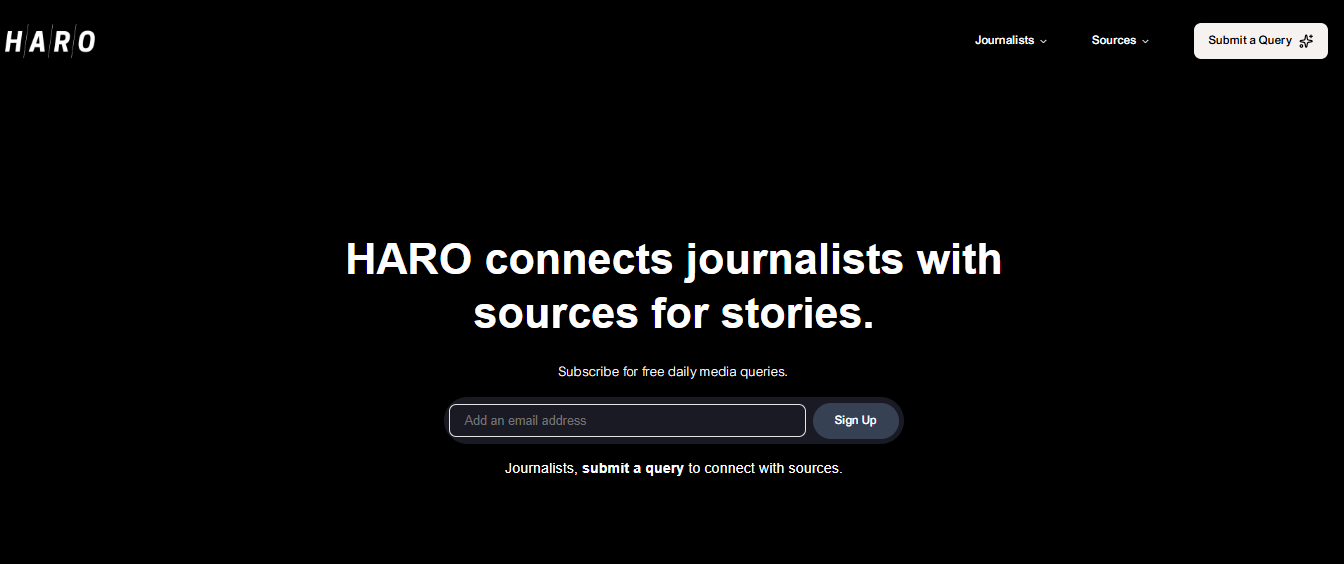
HARO, or Help A Reporter Out, is one of the oldest and most trusted platforms for connecting sources with journalists. It was created to make it easier for reporters to find expert opinions and for individuals or businesses to get media exposure. As a source, you receive email digests three times a day with queries from journalists looking for insights, quotes, or expert advice.
The beauty of HARO is its simplicity. You don’t need a fancy dashboard or complicated software — just scan the emails, find requests that match your expertise, and respond. It covers almost every industry, from lifestyle and travel to finance and health, giving you a wide range of opportunities.
With the help of HARO, we’ve featured our dozens of clients on top media sites.
HARO works best if you are consistent and quick to respond. By focusing on queries that fit your area of expertise, you can build a track record of being a reliable source, which often leads to more frequent media features over time.
What is Journo?
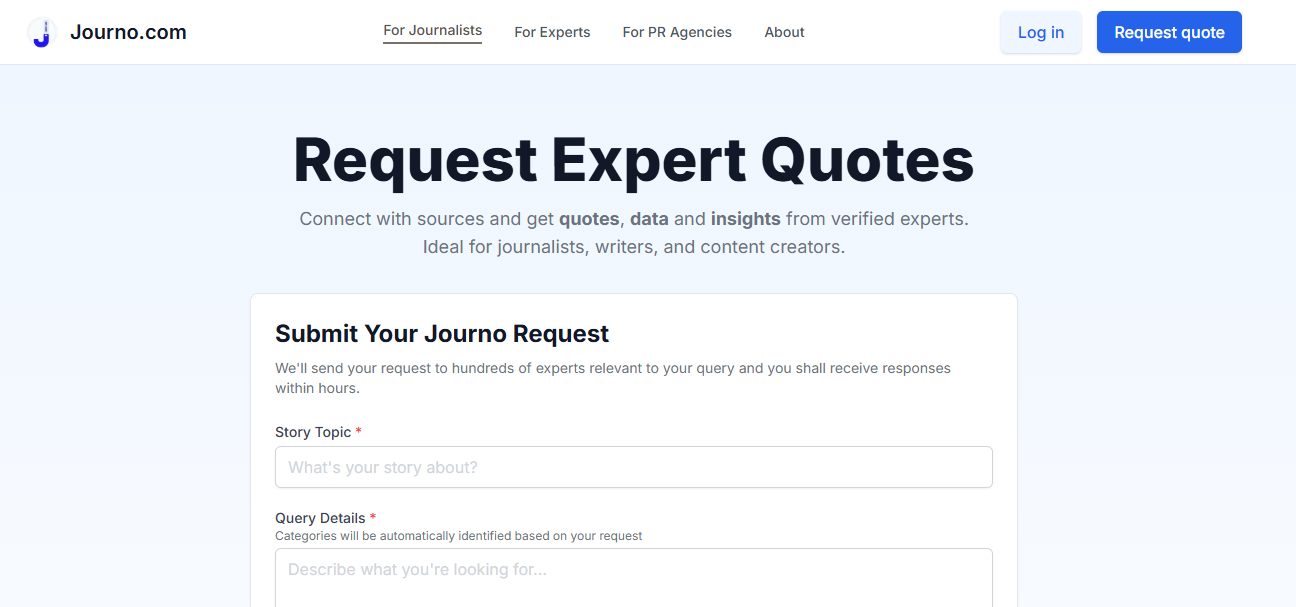
Journo.com is a platform that connects journalists with real, verified experts who can provide quotes, data, and insights for their stories. Instead of cold emails or PR spam, journalists post a request explaining what they need, set a deadline, and Journo sends that request to relevant experts. Responses usually come in within hours.
What makes Journo different is its focus on quality. Every expert is verified, and the platform actively filters out AI-generated or low-value responses. This helps journalists get clear, human quotes they can actually publish, even on tight deadlines. That’s why Journo is used by reporters from major outlets like Forbes, Reuters, The Sun, and the New York Post.
For experts, Journo offers direct access to real media opportunities. If your insight fits a journalist’s request, you can get quoted, earn high-authority mentions, and build credibility — without pitching blindly or chasing reporters.
HARO vs Journo: What’s the Real Difference?
Here are a few major key differences.
Quality of Requests
HARO sends out a high volume of journalist requests every day, but many are broad, unclear, or repeated across industries. This forces experts to guess what the journalist actually wants.
Journo focuses on detailed, well-written requests. Journalists explain their topic, angle, and deadline clearly, which helps experts respond with relevant insights that are more likely to be published.
Expert Verification
On HARO, anyone can sign up and reply, which results in hundreds of low-quality or irrelevant pitches for journalists. Journo verifies every expert before allowing them to respond. This means journalists hear from real professionals with proven experience, and experts compete in a smaller, more credible pool instead of fighting inbox overload.
AI & Spam Control
HARO has become crowded with mass-pitched and AI-written responses, making it harder for journalists to find authentic quotes. Journo actively detects and filters out AI-generated and spammy replies. This keeps the platform focused on genuine human insights, improving trust and increasing the chances that strong expert responses are actually used.
Speed & Deadlines
HARO often works on daily email digests, which can slow things down and cause missed deadlines. Journo is built for speed. Journalists submit a request, and it’s instantly sent to relevant experts. Many receive usable responses within hours, making Journo more suitable for fast-moving news and tight publishing timelines.
Experience for Experts
Using HARO often feels like a volume game—sending dozens of pitches with no feedback. Journo offers a more focused experience. Experts see requests that match their background, respond with intention, and face less competition. This leads to higher response quality, better visibility, and a stronger chance of being quoted by top publications.
Which Platform Should You Choose?
If you’re choosing between HARO and Journo, the right answer depends on how much time and effort you’re willing to invest. But for most people, this decision leans heavily toward HARO.
HARO is still one of the largest and most established platforms for earning media mentions. It’s free to start, widely used by journalists across industries, and offers daily opportunities from well-known publications. If you’re consistent, patient, and willing to pitch regularly, HARO can still deliver strong results, especially for backlinks and brand authority.
That said, HARO is not plug-and-play. You’ll need to scan emails daily, respond fast, and write clear, human pitches that stand out from hundreds of replies. Success on HARO comes from volume, relevance, and timing, not shortcuts.
Conclusion
We’ve used both platforms. HARO is perfect for broad exposure and general backlinks, while Journo platforms give you faster, more targeted opportunities for niche stories and real-time engagement.
By choosing the right platform — or using both strategically — you can boost your credibility, grow your online presence, and build meaningful media relationships.
But if you don’t know how to use these platforms to land media links, reach out today. We’ll help you get featured on top media sites using HARO link building.
FAQs
1. What is the success rate of HARO?
HARO is very effective for gaining high-quality backlinks from reputable websites. For example, one case study reported a 12.3% success rate after sending 114 pitches over six months. To increase your chances, it’s important to consistently send relevant and well-crafted responses to journalist queries.
2. Is HARO free to use?
Yes, HARO is completely free. Journalists post queries looking for expert insights, quotes, or information, and anyone can respond without paying to participate.
3. When is the best time to respond to HARO queries?
HARO sends emails three times a day — morning, noon, and evening. Since journalists work under tight deadlines, it’s best to respond quickly to relevant queries to improve your chances of being featured.
4. Do I need to pay to use HARO or Journo?
HARO offers a free plan, which is enough for most experts starting out. Paid plans mainly offer alerts and filtering. Journo also allows free access, but some opportunities on the platform may include paid placements depending on the publication.
5. Which platform is better for beginners?
HARO is better for beginners because it has more opportunities and doesn’t require expert verification upfront. It’s a good place to learn how journalists think and what kind of answers get published.


.png)
.png)

