Imagine you have found another website accepting guest posts, agreed on a topic, and started another draft. The process is familiar, but your next backlink still depends on writing an entire article for someone else. Eventually, production capacity starts deciding how far your outreach can go.
A broader editorial link profile gives you other routes into relevant publications. Your experience, research, and practical resources each offer a different reason to cite your business. Careful publication selection keeps those opportunities connected to your audience.
The useful starting point is knowing which parts of your work deserve a reference and who would benefit from finding them.
First Off, Let’s Talk About What a Diverse Editorial Link Profile Includes
An editorial link appears because a publisher chooses to reference a source that helps its readers. You can introduce your work through outreach, but the publisher decides whether to include the link, where it goes, and how it is described.
Diversity comes from relevant publishers citing different contributions: a journalist quoting your experience, a trade writer referencing your research, or an editor recommending your calculator. Examine the source websites, their audiences, the linked pages, and the reason behind each reference.
Guest contributions still have a place when they offer useful expertise and receive genuine editorial review. The concern is how links are arranged. Google identifies paid ranking links and manipulative linking practices as link spam; changing the placement format does not resolve that issue. Source: Google’s spam policies.
1. Become a Useful Source for Journalists
Respond to HARO requests that match experience you can demonstrate. Answer the question directly, explain the reasoning behind your answer, and provide your name, role, and relevant background. A specific observation gives a journalist something they can evaluate and potentially quote.
For example, a logistics manager could explain why warehouse congestion begins before a busy sales period. Details about scheduling or receiving procedures give the response substance. A general statement about businesses needing better planning adds little to the story.
Make supporting information easy to find. Research shows that 20% of journalists would move on from a pitch that lacks enough information to develop the story.
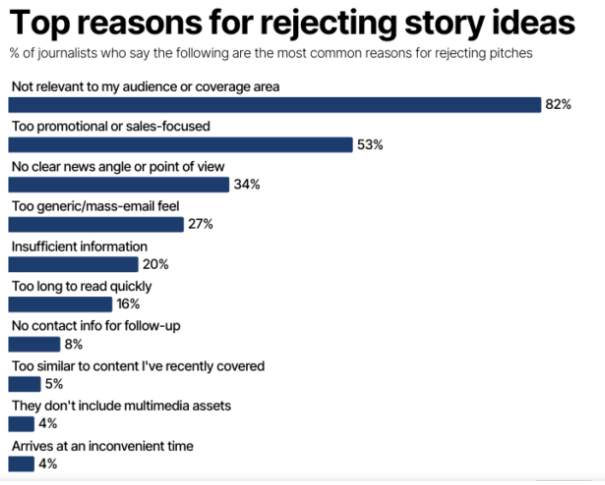
Helpful answers and dependable follow-ups also support repeat invitations. A quote does not guarantee a backlink, so assess publication relevance and potential reader interest alongside the linking outcome.
2. Publish Research That Writers Can Cite
Original research gives publishers a reason to reference a page on your website. Start with a question your audience asks and evidence you can responsibly examine. Useful material includes an analysis of public records, a well-designed survey, or aggregated operational data you have permission to publish.
A delivery software company, for example, could investigate recurring causes of unsuccessful deliveries within its own dataset. Explain the collection period, definitions, sample limitations, and method. Keep the conclusions within what the evidence supports; customer data does not automatically describe the whole market.
Publish the findings on an accessible page with clear charts and the methodology. Contact writers covering the relevant subject and lead with the finding that fits their audience. Research expands your editorial link profile by making your website a reference for evidence, provided the work deserves citation.
3. Create Practical Resources Editors Want to Recommend
A resource earns consideration when it solves a task that another article cannot fully handle. Useful options include a calculator, a working template, a comparison dataset, or an illustrated explanation of a difficult process. Start with a recurring customer problem so the resource has a clear purpose.
For a warehouse business, a storage-capacity calculator could help readers apply advice from an article about expansion. Explain its assumptions, test its outputs, and make it usable without an unnecessary registration barrier. Then approach editors whose existing coverage would benefit from that specific addition.
Choose your destination page according to what the reader needs. A recommendation for a calculator should lead directly to the calculator. Add relevant paths from that resource to your services, while allowing visitors to complete the task that brought them there.
4. Contribute to Interviews and Reported Case Studies
Interviews let you contribute expertise without producing a guest article. Look for industry publications, podcasts with useful web-based show notes, and newsletters that publish accessible interview pages. Review earlier editions to understand the subjects covered and how sources are identified.
Pitch an experience with a clear lesson. A difficult implementation, an assumption that failed, or a decision with an unexpected consequence gives an interviewer something to explore. Explain what happened and why the publication’s audience would care, using examples you are authorized to share.
Provide relevant reference pages when they support the conversation. A host or editor might link to your research, a resource discussed during the interview, or your company profile. Linking remains their decision. A paid appearance is a sponsorship arrangement and should be evaluated separately from earned editorial coverage.
5. Request Attribution Where Your Work Is Already Mentioned
Search for your company name, distinctive research titles, and original resources. Review pages that discuss your work but leave readers without a direct route to the source. These mentions offer a focused opportunity because the writer already considers your contribution relevant.
Contact the author or editor with the exact page and explain where a source link would help. If a story discusses your survey, point to the page containing the full findings and methodology. Keep the request brief and leave the decision with the publisher.
Use the same principle when a link to your work is broken. Check whether the original resource moved and provide its accurate replacement. Match the destination to what the article references; redirecting every old resource to your homepage leaves readers without the information they expected.
Review the Mix Without Forcing Artificial Variety
Audit your editorial link profile by grouping links according to publisher, contribution type, and destination. This reveals practical dependencies. If all recent links came from the same research release or publisher group, another type of contribution could widen your opportunities.
Record whether each placement involved an independent editorial decision. Copies of a syndicated story across several domains do not represent the same breadth of relationships as separately reported coverage. Repeated links from a relevant publication still have value; simply distinguish them from newly reached publishers.
Use anchor text and link attributes as descriptive information, without setting arbitrary quotas. Let editors choose wording that fits their content. Judge future work through relevance, useful referring pages, identifiable audience response, and the effort required. Variety alone does not guarantee stronger rankings or justify pursuing unrelated websites.
Conclusion
A durable editorial link profile starts with contributions you can keep making well. Develop research worth citing, resources worth recommending, and explanations worth quoting. Choose an approach that fits what your business already knows, then add another as your capacity grows.
Keep a clear specialty throughout that work so different publications still connect your name with relevant expertise. You will have a stronger basis for outreach when each proposed link helps someone understand or do something.
FAQs
1. Should You Stop Guest Posting Completely?
No. A relevant guest contribution with genuine editorial review still offers a way to reach readers. Reduce dependence on that format by developing other useful contributions, and assess how each link is earned before treating the placement as worthwhile.
2. How Many Link Types Does Your Website Need?
There is no universal target. Choose approaches that suit your expertise, resources, and audience. Research citations and expert commentary could provide a workable starting mix without adding formats simply to fill categories in a report.
3. Do Editorial Links Always Point to Your Homepage?
No. The destination depends on what the publisher references. Company identification often suits a homepage, while research citations should lead to the findings. Tools, guides, and product pages also fit when they directly support the surrounding content.
4. Can a Small Business Earn Links Without Publishing Research?
Yes. Firsthand expertise, useful templates, interviews, and accurate source attribution offer other routes. Begin with knowledge and materials you already have, then improve their presentation so relevant publishers can assess and reference them easily.
5. Is Asking for an Editorial Link Acceptable?
You can suggest a relevant source when it helps the publisher’s readers. Explain the contribution and allow the editor to decide. Payment, compulsory linking, or reciprocal arrangements introduce different considerations from an independent decision to cite useful work.